 contact@mediskill.com
Ozone Therapy for Women’s Health and Fertility

If you're a woman, chances are you've been let down by conventional medicine.
Maybe you were told it's all in your head. That your symptoms are normal. That nothing can be done, or the only option comes with a long list of side effects.
This isn't just a personal frustration. It's a systemic, centuries-old problem. Medical research has historically been built around male bodies, leaving enormous gaps in understanding how hormones, endocrine-disrupting chemicals, chronic inflammation, and modern diet drive women's health issues. The result: limited clinical guidance, and too many women left without real answers.
Ozone therapy is different. Rather than targeting a single symptom, it works upstream of diseases, supporting immune balance, detoxification, oxidative stress regulation, and metabolism. These are the very mechanisms underlying most women's health conditions. As an adjunctive therapy, it's both powerful and rational.
The evidence is limited. This article seeks to empower you to make the right decisions based on the plausible biological mechanisms and as much evidence as it is available.
How does ozone therapy help with women's health?
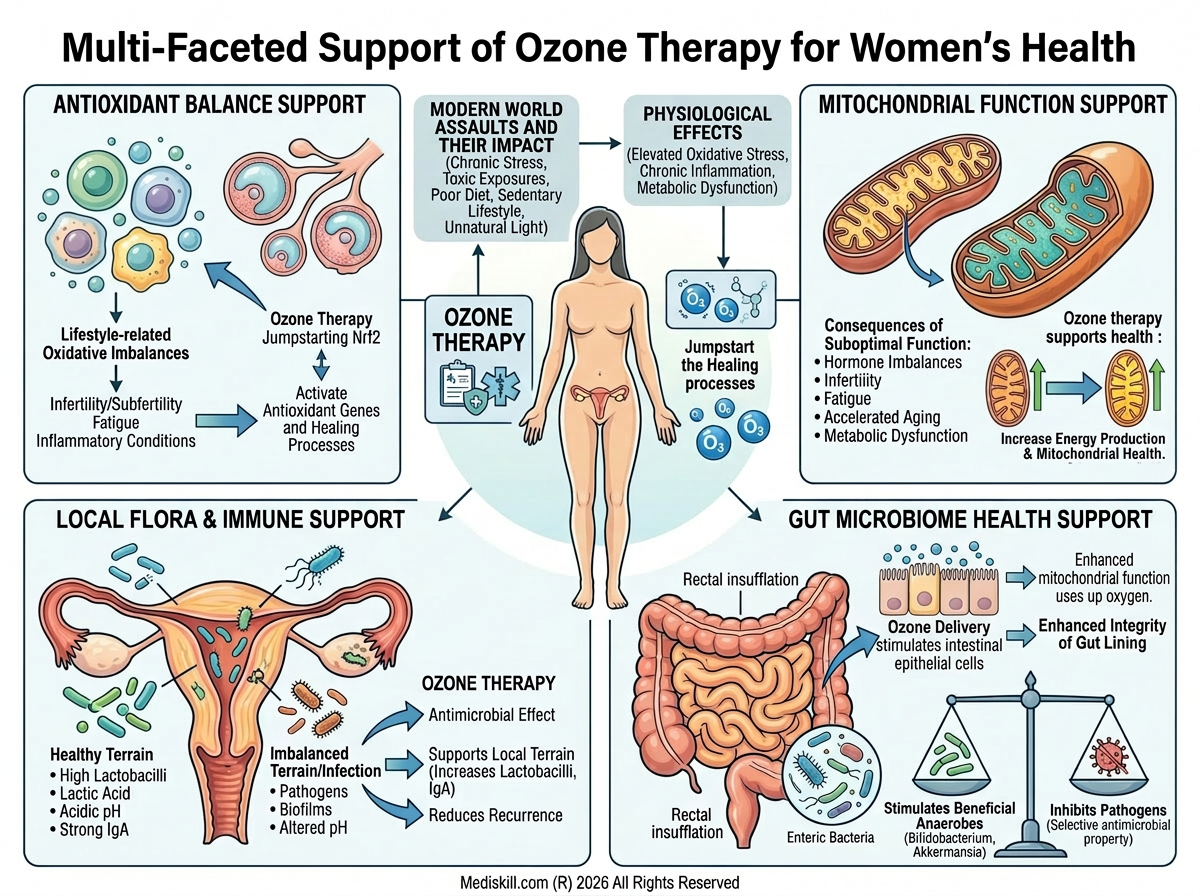
The human body, especially the female body, was never designed for the modern world.
Today's reality includes a near-constant assault of:
- Toxic exposures: pollution, heavy metals, pesticides, plastics, synthetic fragrances, off-gassing from paint and furniture, all of which disrupt hormones and immune function
- Poor diet: calorie-dense, high in omega-6 fats, low in antioxidants and key micronutrients
- Chronic stress: unrelenting, with no real off-switch
- Sedentary lifestyle and sitting
- Unnatural light exposure, especially at night
Together, these create a perfect storm: elevated oxidative stress, toxic burden, chronic low-grade inflammation, and metabolic dysfunction. How that shows up depends on the individual weak link. For some women, it's subfertility. For others, it's PMS, mood disorders, or hormonal chaos.
Infections are part of this picture too. Reproductive and urinary tract infections are rarely just about the pathogen; they reflect an underlying imbalance in pH and local microflora. This is where ozone therapy has a distinct edge: it supports the local terrain, making treatments more effective and reducing the chance of recurrence.
Here's a closer look at how ozone therapy supports women's health specifically.
Supporting healthy antioxidant response and balance
Lifestyle-related oxidative imbalances can contribute to many women’s health issues, such as infertility and subfertility, fatigue, and inflammatory conditions like endometriosis.
Excess oxidative stress can damage cells, lowering egg quality and ovarian function, contributing to hormone imbalances and other women’s health issues [1]. The inability to effectively quench oxidative stress also contributes to women’s midlife symptoms including hot flashes, fatigue, cognitive decline, depression, and increased cardiovascular risk [2].
Ozone therapy delivers a small amount of oxidative stress that jumpstarts Nrf2, activating various antioxidant genes and relevant healing processes [3].
Supporting mitochondrial function
Most people nowadays have suboptimal mitochondria function thanks to lifestyle-related oxidative stress and toxic burden, and the consequences go beyond energy [4].
Your steroid hormones like estrogen, progesterone, testosterone, and cortisol are produced in the mitochondria of your endocrine tissues.
The mitochondria also provide the ATP needed for your egg maturation, fertilization, and even embryonic development after conception.
Unhealthy mitochondria in women can manifest as:
- Hormone imbalances: too much or too little of certain hormones
- Infertility or subfertility due to poor egg and endometrial health [5]
- Occasional fatigue not attributed to a medical condition [6]
- Suboptimal or accelerated aging, such as struggles with perimenopause or menopausal symptoms
- Metabolic dysfunction that may contribute to weight gain, PCOS, and insulin resistance
By jumpstarting the antioxidant and detoxification response, and improving oxygen utilization, ozone therapy can support mitochondrial health. This explains why many people experience increased energy and a sense of wellbeing, relief from their conditions, or even conceive after introducing ozone therapy.
Supporting healthy local flora and immune function
There are two parts to any infection: the infectious agent and the terrain that allow for the infection. The infection can only occur if your immune system, often involving the local flora, cannot keep the infection at bay.
Infections that affect the women’s reproductive and urinary tract tend to happen when the local flora are imbalanced as these areas are naturally exposed to microbes from feces. Good bacteria, like lactobacilli, produce lactic acid and maintain an acidic pH, preventing the infection from taking hold.
When women go through hormonal changes, it affects the reproductive and urinary tract pH and environment, making it less habitable for good bacteria in these areas. This is why women are more susceptible to infections during these times of their lives, or if they’re exposed to things that disrupt the flora, such as antibiotics [7].
This explains why these vaginoses or UTIs tend to become chronic or keep coming back—the antibiotics don’t populate a healthy local flora or improve the local immune systems.
Ozone is advantageous as a treatment for feminine issues because it supports the terrain. In a clinical study involving 150 women with recurrent vaginal candidiasis, 10 weeks of low-glycemic index combined with various ozone treatments including vaginal insufflation increased lactobacilli and IgA in the vaginal epithelium [8]. Overall, 95% of the cases responded favorably, with 10% having remissions lasting longer than a year.
As an antimicrobial, ozone is broad-spectrum, does not create resistance, and can break biofilm. It can also make the microbes more susceptible to medications, making the combined treatments even more effective [9].
Lastly, ozone inhibits pro-inflammatory cytokines while promoting the production of anti-inflammatory mediators, creating an environment conducive to healing [10]. For women dealing with chronic inflammation caused by infections or autoimmune conditions, this modulation can significantly improve symptoms and prevent further damage.
By addressing both the root cause and the body’s response to recurring infections, ozone therapy not only alleviates symptoms but also supports long-term health and fertility.
Supporting healthy gut flora
A healthy gut plays a pivotal role in women’s overall health, influencing everything from immune function to hormone balance, digestive health, and fertility. Ozone therapy, particularly via rectal insufflation, offers a unique way to support gut health by fostering a favorable environment for beneficial gut microbes.
Rectal insufflation delivers ozone–oxygen directly to the gut lining, where it stimulates mitochondrial function in intestinal epithelial cells [11,12]. The enhanced mitochondrial activity likely increases cellular energy and repair mechanisms, improving the integrity of the gut lining. When the gut lining consumes all the oxygen, the oxygen-free environment becomes more hospitable to friendly anaerobes, such as Bifidobacterium, Bacteroides, and Akkermansia.
At the same time, ozone’s antimicrobial properties tend to kill pathogenic bacteria, viruses, and fungi while leaving beneficial microbes intact. This selective action allows the gut flora to rebalance naturally, promoting a healthier microbiome [13].
For women dealing with gut-related issues such as irritable bowel syndrome (IBS), small intestinal bacterial overgrowth (SIBO), or Candida overgrowth, this modulation can significantly improve symptoms. Ozone oil capsules can also support the terrain in the upper gut where rectal ozone does not reach.
A healthy gut microbiome is essential for hormone regulation, nutrient absorption, and immune system support. These are all essential for women to feel great and be in optimal health. The right ozone treatments can help women address underlying issues that may be impacting their overall wellbeing.
Ozone therapy for women's health and fertility: the clinical evidence
In this section, we’ll explore the clinical potential of ozone therapy in various aspects of women’s health and fertility. From resolving vaginal infections to improving egg quality, we’ll examine how ozone’s multifaceted effects can support women at different stages of their health journey.
Whether used as a standalone treatment or alongside conventional therapies, ozone supports the body’s own balance and healing mechanisms. These ozone treatments are offered and legally recognized as a complementary treatment in many European countries and countries with less access to medications, like Cuba [14].
Vaginosis
Vaginosis, often referred to as bacterial vaginosis (BV), is caused by an imbalance in the natural bacterial flora of the vagina. Healthy vaginal microbiota are typically dominated by Lactobacillus species, which produce lactic acid to maintain an acidic pH that inhibits the growth of harmful bacteria. In vaginosis, this balance is disrupted, leading to an overgrowth of anaerobic bacteria such as Gardnerella vaginalis and Prevotella species [15].
The exact cause of vaginosis is not always clear, but contributing factors can include frequent douching, unprotected intercourse, hormonal changes, or the use of antibiotics, which can disrupt the vaginal microbiome. Symptoms often include abnormal vaginal discharge with a fishy odor, itching, and discomfort, though some cases may be asymptomatic.
The current standard treatments for vaginosis involve antibiotics such as metronidazole or clindamycin, which target the overgrown anaerobic bacteria. While generally effective, these treatments can disrupt the overall microbial balance, potentially leading to recurrent infections [16].
Emerging therapies, including probiotics and natural interventions, aim to restore the healthy vaginal microbiome more sustainably. Although ozone is an antimicrobial, it seems to protect the healthy vaginal flora, especially lactobacilli species.
An observational study included 30 healthy women aged 18–50 years who were non-pregnant, non-lactating, and free from vaginal infections [17].
Over three consecutive days, participants underwent a 5-minute vaginal lavage with ozonated water at a concentration of 80 mg/L, delivered via a medical integrated oxygen therapy device. Vaginal secretions were collected at baseline and at weeks 1, 2, and 3 after the final lavage.
Ozonated water lavage resulted in:
- Preserved microbial balance: There were no significant changes in key indicators such as Nugent score, AV score, microbial density, or microbial diversity, indicating that ozonated water did not disrupt vaginal microecology.
- Lactobacillus Integrity: The dominant flora remained the same before and after treatment, with Lactobacillus iners, Lactobacillus crispatus, and Lactobacillus jensenii maintaining their type and abundance levels.
Ozonated water appears to effectively kill pathogens while preserving Lactobacillus populations and the overall vaginal microecology.
This treatment could serve as an adjunct to traditional therapies, providing an innovative, low-risk option for managing vaginitis. However, the study emphasizes the need for further research to validate these findings in larger, diverse populations and clinical settings.
Vaginal candidiasis
Vaginal candidiasis, commonly known as a yeast infection, is a fungal infection predominantly caused by Candida albicans, though other Candida species may also be responsible. This condition arises when the natural balance of microorganisms in the vagina is disrupted, allowing Candida to proliferate excessively [18].
Common triggers include:
- Antibiotic use
- Hormonal fluctuations
- Pregnancy
- Diabetes
- Weakened immune system
- Wearing tight, non-breathable clothing
Symptoms include intense itching, burning, redness, swelling, and thick discharge similar to cottage cheese. Current treatments for vaginal candidiasis generally involve antifungal medications, available in oral, topical, or suppository forms [19]. While effective in most cases, antifungal resistance and recurrent infections are common.
A randomized controlled trial focused on 50 women with recurrent vulvovaginitis caused by Candida albicans. Participants were divided into two groups: one received traditional systemic and local antifungal treatments (Group A), while the other received vaginal ozone insufflation therapy (Group O) [20].
The ozone treatment involved using a catheter to deliver the gas mixture for 6 minutes every other day over 12 sessions. Ozone concentrations ranged between 20–40 µg/mL, with oxygen flow rates of 1/32 to 1/8 liters per minute.
Ozone therapy resulted in:
- Significant reductions in symptoms such as itching (p = 0.0001), burning, leukorrhea, and discomfort (p = 0.0001).
- Equivalent anti-candida efficacy to clotrimazole, with significant improvements in clinical symptoms and reduced vaginal inflammation.
- Negative cultures for Candida albicans in 82% of cases, compared to 74% in the clotrimazole group post-treatments.
- Faster resolution of severe symptoms compared to the clotrimazole group.
Ozone therapy was well-tolerated, with no reported adverse effects. Vaginal ozone insufflation proved to be a promising, non-invasive alternative to traditional antifungal treatments for recurrent vulvovaginal candidiasis. This innovative approach offers potential for managing infections resistant to conventional antifungal treatments.
Tubal occlusion
Tubal occlusion, or blockage of the fallopian tubes, is a significant cause of female infertility. The fallopian tubes play a critical role in reproduction, serving as the passageway for the egg to travel from the ovary to the uterus.
Tubal occlusion can result from various conditions, including [21]:
- Pelvic inflammatory disease (PID): Infections, particularly those caused by sexually transmitted diseases like chlamydia or gonorrhea, can lead to scarring and blockages.
- Endometriosis
- Previous surgeries
- Congenital abnormalities
- Tubal ligation: A form of surgical sterilization that intentionally blocks or seals the tubes.
Current treatments include [22,23]:
- Tuboplasty: A surgical procedure to open or remove blockages in the tubes.
- Fimbrioplasty: Reconstructs the fimbriae, the fringe-like ends of the tubes, to improve egg capture.
- In vitro fertilization (IVF)
- Antibiotics: Infections causing acute blockages may be treated with antibiotics to prevent further damage.
- Anti-inflammatory treatments
While these treatments are effective in certain cases, addressing tubal occlusion remains a complex challenge, especially when combined with other factors affecting fertility.
A randomized control trial evaluated the efficacy of ozone water perfusion in improving outcomes of fallopian tube obstruction recanalization in 116 patients diagnosed with obstruction [24].
Patients were randomized into two groups: the experimental group received fallopian tube perfusion with ozone water after recanalization, while the control group received standard anti-inflammatory and anti-adhesion drugs post-recanalization. The patients were followed for six months.
Ozone water treatment resulted in:
- Comparable recanalization success (93.1% in the experimental group vs. 91.4% in the control group)
- Comparable symptom relief between groups two weeks post-procedure
- Significantly higher pregnancy rate in the ozone-treated group (79.3%) compared to the control group (60.3%; p < 0.05)
- Significantly lower re-occlusion in the experimental group (5.2%) than in the control group (17.2%; p < 0.05)
These findings suggest that ozone water perfusion may offer enhanced therapeutic benefits in managing tubal infertility.
Endometriosis
Endometriosis is a chronic gynecological condition where tissue similar to the uterine lining, known as endometrial-like tissue, grows outside the uterus [25]. This misplaced tissue often affects the ovaries, fallopian tubes, the pelvis, or even the gut or other areas of the body.
Endometriosis is a leading cause of painful periods, pelvic pain, infertility, and other obscure symptoms that may include other systems. It’s also comorbid and correlates in severity with conditions like small intestinal bacterial overgrowth and depression [26, 27].
A pilot study evaluated the effects of combined ozone sauna therapy (OST) and pulsed electromagnetic field therapy (PEMF) using the HOCATT machine on chronic pelvic pain (CPP) and inflammation in eight women with endometriosis [28].
Participants received six sessions of OST and PEMF over three weeks, delivered transdermally and intravaginally via the HOCATT machine (twice weekly). Treatment resulted in significant:
- Pain reduction following the fourth session (p < 0.05)
- Inflammatory marker changes:
- CRP levels decreased significantly (p = 0.04).
- IL-1β levels dropped significantly (p = 0.003), indicating reduced systemic inflammation.
- IL-8 levels increased significantly (p = 0.03), suggesting potential modulation of immune response.
By reducing inflammatory markers and alleviating pain, this combined approach could improve the quality of life for women with endometriosis.
Egg quality
Egg quality, or oocyte health, plays a crucial role in female fertility and successful conception. High-quality eggs are characterized by their ability to mature, fertilize, and support early embryonic development [29]. Egg quality is determined by mostly the same factors that determine corpus luteum quality, and thus correlates with other aspects of fertility [30].
Several factors influence egg quality, including age, oxidative stress, hormone balance, and toxic exposures. Age is the most significant factor; as women age, the number and quality of oocytes decline due to increased DNA damage, chromosomal abnormalities, and declining mitochondrial function [31]. Many of these are changes that may be mitigated by ozone therapy.
To improve egg quality, the standard approaches include hormone therapy and supplemental antioxidants [32], in addition to in vitro maturation (IVM).
An Italian fertility group studied ozone therapy combined with IVF, using a protocol called Human Assisted Reproduction Ozone Therapy (HAROT) in a case series. This study included 500 couples with primary sterility and 100 couples who owned at least two vitrified embryos [33]. Since these couples were under the clinic’s medical care, the study did not require an ethics board review.
After structural fertility issues were ruled out, all the women in the 500 couples received typical stimulation protocols and medications. They were divided into groups A (control) and B (ozone).
Group B women received autohemotherapy ~1 week prior to ovarian stimulation, while the follicle was 12–14 mm, and at embryo transfer.
Women with vitrified embryos received endometrial preparation with progesterone, aspirin, prednisone, and nadroparin calcium 2850 IU. These women were divided into groups C (control) and D (ozone).
Group D received ozone autohemotherapy a few days before the start of endometrial preparation and at transfer.
As a result, Group B had significantly higher levels of estradiol on the day of induction. They also had more mature oocytes and better oocyte quality, fertilization index, number of embryos, embryo quality, and implantation percentage.
Group D had more endometrial induction associated with progestin and better implantation percentage, along with better blood oxygenation.
This study, while not controlled with placebo, suggests that ozone therapy may be a helpful adjunctive treatment in fertility clinics, or even during natural conception, when supervised by a qualified physician.
Another prospective study used ozone sauna therapy (OST) and pulsed electromagnetic field therapy (PEMF) on 44 women with severely diminished ovarian reserve (DOR) undergoing in vitro fertilization (IVF) and frozen embryo transfer [34].
Participants with DOR underwent two IVF cycles. The first cycle (Cycle 1) was conducted using standard protocols. Participants then received OST + PEMF sessions twice a week for three weeks before starting their second IVF cycle (Cycle 2) under the same protocol.
OST + PEMF resulted in significantly:
- Improved endometrial thickness in Cycle 2 compared to Cycle 1, with all patients achieving a satisfactory endometrial thickness (EMT) of approximately 7 mm.
- Improved embryo formation after OST + PEMF in Cycle 2, despite no change in the number of oocytes retrieved or baseline hormone levels.
OST + PEMF may enhance endometrial receptivity and embryo formation without increasing oocyte count, potentially through improved oocyte quality and ovarian function.
Sperm quality
Sperm quality refers to the ability of sperm to fertilize an egg and is assessed through parameters such as motility, morphology, and concentration [35].
Sperm quality can be worsened by [36]:
- Oxidative stress
- Heat exposure
- Hormonal disruptions
- Infections
- Smoking
- Excessive alcohol consumption
- Sedentary habits
Improving sperm quality involves addressing underlying health issues and adopting interventions like:
- Antioxidant supplementation, including vitamins C and E, zinc, and selenium,
- Maintaining a healthy weight
- Avoiding heat exposure (e.g., saunas, hot tubs)
- Hormonal therapies
- Varicocele repair surgery
A prospective study investigated the effects of ozone therapy on sperm quality in 30 men diagnosed with oligozoospermia (low sperm count) [37].
Participants were treated with ozone therapy administered rectally, resulting in:
- 40% increased sperm concentration
- 30% improved total motility
- 25% increased normal morphology
- Decreased oxidative stress markers
Ozone therapy appears to be a promising non-invasive intervention for improving sperm quality in men with oligozoospermia. The study suggests that the therapy’s ability to reduce oxidative stress and enhance cellular function could be the mechanisms driving these improvements.
Breast and gynecological cancers
After diagnosing me with Stage 4 ovarian cancer in 2018, the doctors gave me 2 months left to live. I was fighting for my life and burning through my resources with chemo, immunotherapy, and all. I had to give up my work as a personal chef for those with chronic illnesses, put my pets in foster care, and send my son to live with his father to focus on my health.
The side effects were dreadful. Indescribable fatigue, nausea, and brain fog for 5–7 days after each treatment, which was every 2 weeks. It’s so yucky it’s hard to describe. Even with the pre-meds they gave you, it’s still hard, even for very healthy people.
I’m also a holistic nutritionist who knows how to eat well and tries a lot of alternative modalities. My treatments have been integrative and conservative, but I’ve never had such amazing results as with rectal ozone treatment.
In late 2021, I had to restart chemo and did rectal ozone for 2 months. I had more energy. I knew right away that this was it. As I increased the dose to twice a day as was recommended, all my chemo side effects went away except for a little brain fog.
When I saw my labs last week, I could not believe it. For the first time in my adult life, my white cell count – in the middle of my chemo – was normal at 4.4. It had always been 3 - 3.5. And I wasn’t anemic anymore, which I’d been throughout my adult life. This probably partly explains why the fatigue is now gone.
I cannot recommend rectal ozone treatment enough. It’s made a huge difference for me and it’s only been 2 months.
The hardest thing for me in the very beginning was setting up the equipment. I was terrified, but it was so much easier than I thought it would be. The rectal ozone treatment just took 3 minutes of my time twice a day, and I feel better than I’ve felt in so long, and I’m able to get through chemo. 3 minutes! I’m so astonished. I wasn’t expecting this much. The rectal insufflation is nothing – a tiny little catheter that goes very shallowly into the rectum. You just roll the bag for it to go into your rectum… Then it goes into your bloodstream. No need to hold it in or anything. It’s so easy and so amazing. I can’t say enough. ~ Babette Lamarre
Breast and gynecological cancers include ovarian, uterine, cervical, and vulvar cancers.
These cancers arise from various tissues in the reproductive system or breast, often due to genetic mutations, hormonal imbalances, and carcinogen exposures [38,39]. Risk factors include family history, certain inherited mutations, and chronic inflammation.
Research into complementary therapies, including ozone therapy, is gaining traction as a way to improve patient outcomes and quality of life.
A randomized controlled trial assessed the benefits of combining ozone therapy with standard chemoradiation in treating 20 patients with stage IIIb cervical cancer. Patients were divided into two groups: a control group (n=10) receiving standard chemoradiation (external beam radiotherapy, total dose 80 Gy, plus weekly cisplatin 40 mg/m²) and a main group (n=10) receiving systemic and local ozone therapy in addition to the same regimen [40].
Systemic ozone therapy involved intravenous administration of 250 ml ozonated saline (0.9% sodium chloride) over 15 sessions during radiotherapy, while local ozone therapy consisted of 15-minute vaginal instillations during brachytherapy.
Ozone treatment resulted in:
- Faster pain and discomfort resolution in the lower abdomen
- Faster tumor regression, reduced purulent discharge, and alleviation of intoxication syndrome
- Reduced rates of gastrointestinal toxicity (10% in the ozone group versus 100% of the control group)
- Complete clinical regression (revealed by MRI) in 90% of the ozone group compared to 65% in the control group.
- Shorter therapy duration for the Ozone group: 7 weeks compared to 8.5 weeks for the control group.
Combination ozone therapy enhanced the antitumor effects of chemoradiation while providing radioprotection, reducing chemotherapy-induced side effects, and accelerating treatment timelines. It presents a promising adjunctive therapy for cervical cancer without worsening existing conditions.
Menopause
Menopause is a natural stage of life marked by the cessation of menstrual cycles, but it often brings challenging symptoms such as [41]:
- Hot flashes
- Mood changes
- Fatigue
- Metabolic disruptions
While there is no direct clinical evidence tying ozone therapy to menopause symptom relief, its mechanisms of action suggest potential benefits for women navigating this phase.
Supporting mitochondrial health
Mitochondria tends to decline with age. This decline can affect hormone production, as mitochondria play a critical role in synthesizing steroid hormones like estrogen and progesterone [42].
By boosting mitochondrial efficiency and reducing oxidative stress, ozone therapy may support hormonal health during menopause.
Modulating blood sugar and inflammation
Imbalanced blood sugar levels and chronic inflammation are linked to more severe menopausal symptoms such as fatigue and hot flashes. Ozone therapy, through its ability to modulate insulin response and inflammatory pathways, may help stabilize these factors, contributing to improved symptom management.
- Enhancing detoxification of xenoestrogens
Xenoestrogens, synthetic compounds found in the environment that mimic estrogen, can worsen menopausal symptoms [43]. Ozone therapy has been shown to enhance phase 2 detoxification processes in the liver [44], which could help clear these harmful compounds and balance estrogen levels more effectively. - Promoting wellbeing
Research has shown that ozone therapy can improve quality of life by reducing pain, boosting energy, and delivering a general sense of wellbeing to women experiencing mood swings and fatigue during menopause [44].
Although more research is needed to confirm its role, ozone therapy offers a promising avenue for addressing the multifaceted challenges of menopause by targeting underlying cellular and metabolic processes.
Conclusion
Women’s health issues are often complex and nuanced, requiring an individualized approach. In addition, the healthcare structure and history of research have failed to fulfill women’s health needs. Given that chronic inflammation, oxidative stress, poor mitochondrial function, and dysbiosis are major contributors to women’s health issues, ozone therapy can often fill the gap. In some cases, ozone provides a wellness and health optimization modality, while in others it’s an adjunctive treatment that can significantly improve clinical outcomes.
That said, the evidence is fairly limited if you apply the same stringency as you would for other medical treatments. Part of this has to do with the conundrum that women’s health conditions are poorly researched. Since ozone is a very safe modality with a long history of use, millions of women choose to experiment and find positive outcomes with ozone therapy even without direct evidence. Overall, whether to try ozone therapy should be an informed decision you make in collaboration with your care team.
References:
1 Ruder, E. H., Hartman, T. J. and Goldman, M. B. (2009) Impact of oxidative stress on female fertility. Curr. Opin. Obstet. Gynecol. 21, 219–222 https://doi.org/10.1097/gco.0b013e32832924ba
2 Bonaccorsi, G., Piva, I., Greco, P. and Cervellati, C. (2018) Oxidative stress as a possible pathogenic cofactor of post-menopausal osteoporosis: Existing evidence in support of the axis oestrogen deficiency-redox imbalance-bone loss: Existing evidence in support of the axis oestrogen deficiency-redox imbalance-bone loss. Indian J. Med. Res., Scientific Scholar 147, 341–351 https://doi.org/10.4103/ijmr.IJMR_524_18
3 Clavo, B., Rodríguez-Esparragón, F., Rodríguez-Abreu, D., Martínez-Sánchez, G., Llontop, P., Aguiar-Bujanda, D., et al. (2019) Modulation of oxidative stress by ozone therapy in the prevention and treatment of chemotherapy-induced toxicity: Review and prospects. Antioxidants (Basel), MDPI AG 8, 588 https://doi.org/10.3390/antiox8120588
4 Bassi, G., Sidhu, S. K. and Mishra, S. (2021) The Expanding Role of Mitochondria, Autophagy and Lipophagy in Steroidogenesis. Cells 10 https://doi.org/10.3390/cells10081851
5 Shaum, K. M. and Polotsky, A. J. (2013) Nutrition and reproduction: is there evidence to support a “Fertility Diet” to improve mitochondrial function? Maturitas 74, 309–312 https://doi.org/10.1016/j.maturitas.2013.01.011
6 Rooney, K. L. and Domar, A. D. (2018) The relationship between stress and infertility. Dialogues Clin. Neurosci. 20, 41–47
7 Colella, M., Topi, S., Palmirotta, R., D’Agostino, D., Charitos, I. A., Lovero, R., et al. (2023) An overview of the Microbiota of the human urinary tract in health and disease: Current issues and perspectives. Life (Basel), MDPI AG 13, 1486 https://doi.org/10.3390/life13071486
8 Tapia, A. (2015) Ozone therapy in the treatment of recurrent vulvo-vaginitis by Candida albicans
9 Alia, A. S. and Kholoud, K. H. A.-O. (2014) The effect of ozone on bacterial vaginosis and how it is affected by ultrastructural changes of cells by transmission electron microscope (TEM). Afr. J. Microbiol. Res., Academic Journals 8, 1060–1069 https://doi.org/10.5897/ajmr2013.5902
10 de Sire, A., Marotta, N., Ferrillo, M., Agostini, F., Sconza, C., Lippi, L., et al. (2022) Oxygen-ozone therapy for reducing pro-inflammatory cytokines serum levels in musculoskeletal and temporomandibular disorders: A comprehensive review. Int. J. Mol. Sci., MDPI AG 23, 2528 https://doi.org/10.3390/ijms23052528
11 Sukhotnik, I., Starikov, A., Coran, A. G., Pollak, Y., Sohotnik, R. and Shaoul, R. (2015) Effect of ozone on intestinal epithelial homeostasis in a rat model. Rambam Maimonides Med J 6, e0006 https://doi.org/10.5041/RMMJ.10181
12 Litvak, Y., Byndloss, M. X. and Bäumler, A. J. (2018) Colonocyte metabolism shapes the gut microbiota. Science, American Association for the Advancement of Science (AAAS) 362, eaat9076 https://doi.org/10.1126/science.aat9076
13 Bertuccio, M. P., Rizzo, V., Arena, S., Trainito, A., Montalto, A. S., Caccamo, D., et al. (2023) Ozoile Reduces the LPS-Induced Inflammatory Response in Colonic Epithelial Cells and THP-1 Monocytes. Curr Issues Mol Biol 45, 1333–1348 https://doi.org/10.3390/cimb45020087
14 The use of ozone therapy as a palliative treatment in diseases grows in Spain. AEPROMO https://aepromo.org/en/the-use-of-ozone-therapy-as-a-palliative-treatment-in-diseases-grows-in-spain/
15 Kairys, N., Carlson, K. and Garg, M. (2024) Bacterial Vaginosis. In StatPearls [Internet], StatPearls Publishing
16 Abbe, C. and Mitchell, C. M. (2023) Bacterial vaginosis: a review of approaches to treatment and prevention. Front Reprod Health 5, 1100029 https://doi.org/10.3389/frph.2023.1100029
17 Zhang, Q.-Q., Zhang, L., Liu, Y., Wang, Y., Chen, R., Huang, Z.-Y., et al. (2019) Effect of ozonated water on normal vaginal microecology and Lactobacillus. Chin Med J (Engl) 132, 1125–1127 https://doi.org/10.1097/CM9.0000000000000216
18 Jeanmonod, R., Chippa, V. and Jeanmonod, D. (2024) Vaginal Candidiasis. In StatPearls [Internet], StatPearls Publishing
19 Satora, M., Grunwald, A., Zaremba, B., Frankowska, K., Żak, K., Tarkowski, R., et al. (2023) Treatment of Vulvovaginal Candidiasis-An Overview of Guidelines and the Latest Treatment Methods. J Clin Med 12 https://doi.org/10.3390/jcm12165376
20 Nyoman Hariyasa Sanjaya, I. and Pemayun, C. I. M. (2023) Vaginal Ozone Insufflation in Management of Vaginal Candidiasis. EJMED 5, 13–16 https://doi.org/10.24018/ejmed.2023.5.5.1414
21 El-Kharoubi, A.-F. (2023) Tubal Pathologies and Fertility Outcomes: A Review. Cureus 15, e38881 https://doi.org/10.7759/cureus.38881
22 Roberts, A. (2023) Fallopian tube recanalization for the management of infertility. CVIR Endovasc 6, 13 https://doi.org/10.1186/s42155-023-00356-z
23 Melo, P., Georgiou, E. X., Johnson, N., van Voorst, S. F., Strandell, A., Mol, B. W. J., et al. (2020) Surgical treatment for tubal disease in women due to undergo in vitro fertilisation. Cochrane Database Syst Rev 10, CD002125 https://doi.org/10.1002/14651858.CD002125.pub4
24 Sun, N., Wei, L., Chen, D., Gao, W., Niu, H. and He, C. (2017) Clinical observation of fallopian tube obstruction recanalization by ozone. Pak J Med Sci 33, 290–294 https://doi.org/10.12669/pjms.332.11961
25 Tsamantioti, E. S. and Mahdy, H. (2023) Endometriosis. In StatPearls [Internet], StatPearls Publishing
26 Halfon, P., Estrade, J.-P., Penaranda, G., Choucroun, N., Bouaziz, J., Nicolas-Boluda, A., et al. (2025) High prevalence of small intestinal bacterial overgrowth and intestinal methanogen overgrowth in endometriosis patients: A case-control study. Int. J. Gynaecol. Obstet., Wiley https://doi.org/10.1002/ijgo.70005
27 Petraglia, F., Vannuccini, S., Donati, C., Jeljeli, M., Bourdon, M. and Chapron, C. (2025) Endometriosis and comorbidities: molecular mechanisms and clinical implications. Trends Mol. Med., Elsevier BV https://doi.org/10.1016/j.molmed.2025.09.002
28 Merhi, Z., Emdin, D., Bosman, L., Incledon, T. and Smith, A. H. (2023) Ozone Sauna Therapy (OST) and Pulsed Electromagnetic Field Therapy (PEMF) delivered via the HOCATT machine could improve endometriosis pain along with lowering serum inflammatory markers. Am J Reprod Immunol 89, e13690 https://doi.org/10.1111/aji.13690
29 Oliver, R. and Basit, H. (2023) Embryology, Fertilization. In StatPearls [Internet], StatPearls Publishing
30 Duncan, W. C. (2021) The inadequate corpus luteum. Reprod. Fertil., Bioscientifica 2, C1–C7 https://doi.org/10.1530/RAF-20-0044
31 Al-Inany, H. (2005) Female infertility. Clinical Evidence 2005, 0819
32 Carson, S. A. and Kallen, A. N. (2021) Diagnosis and Management of Infertility: A Review. JAMA 326, 65–76 https://doi.org/10.1001/jama.2021.4788
33 Irollo, A. M., Gangale, M. F., Calabrese, G., Stortini, E., Zanconi, S., Aiello, R., et al. (2019) H.A.R.O.T. Human assisted reproduction ozone therapy: the use of Oxygen-Ozone therapy as an adjunct in the therapy of couple sterility. Ozone Ther., PAGEPress Publications 4, 64–67 https://doi.org/10.4081/ozone.2019.8700
34 Dias, A. R., Bitsaktsis, C., Emdin, D., Bosman, L., Smith, A. H. and Merhi, Z. (2023) Ozone sauna therapy and pulsed electromagnetic field therapy could potentially improve outcome in women with diminished ovarian reserve undergoing assisted reproductive technology. Med Gas Res 13, 202–207 https://doi.org/10.4103/2045-9912.350862
35 Sunder, M. and Leslie, S. W. (2022) Semen Analysis. In StatPearls [Internet], StatPearls Publishing
36 Santolaria, P., Rickard, J. P. and Pérez-Pe, R. (2023) Understanding Sperm Quality for Improved Reproductive Performance. Biology (Basel) 12 https://doi.org/10.3390/biology12070980
37 Hailu, H. E., Mondul, A. M., Rozek, L. S. and Geleta, T. (2020) Descriptive Epidemiology of breast and gynecological cancers among patients attending Saint Paul’s Hospital Millennium Medical College, Ethiopia. PLoS One 15, e0230625 https://doi.org/10.1371/journal.pone.0230625
38 (2025, March 7) Genetics of Breast and Gynecologic Cancers (PDQ®) https://www.cancer.gov/types/breast/hp/breast-ovarian-genetics-pdq
39 Rodionova, O. G., Gusareva, M. A., Sheiko, E. A., Voshedskiy, V. I., Sakun, P. G., Vasilieva, E. O., et al. (2021) Combination ozone therapy as an effective method of radiomodification in chemoradiation treatment of patients with cervical cancer. Journal of Clinical Oncology, Wolters Kluwer Health https://doi.org/10.1200/JCO.2021.39.15_suppl.e17515
40 Peacock, K., Carlson, K. and Ketvertis, K. M. (2023) Menopause. In StatPearls [Internet], StatPearls Publishing
41 Shaw, G. A. (2021) Mitochondria as the target for disease related hormonal dysregulation. Brain Behav Immun Health 18, 100350 https://doi.org/10.1016/j.bbih.2021.100350
42 Wang, X., Ha, D., Yoshitake, R., Chan, Y. S., Sadava, D. and Chen, S. (2021) Exploring the Biological Activity and Mechanism of Xenoestrogens and Phytoestrogens in Cancers: Emerging Methods and Concepts. Int J Mol Sci 22 https://doi.org/10.3390/ijms22168798
43 Hashimoto, T., Takahashi, K. and Murakami, T. (2006) Characteristics of estrogen decomposition by ozonation. Water Sci Technol 54, 87–93 https://doi.org/10.2166/wst.2006.806
44 Bocci, V. (2010) The Clinical Application of Ozonetherapy. OZONE 97 https://doi.org/10.1007/978-90-481-9234-2_9
Get Started with Ozone
.png)

