
Ozone Sauna Therapy
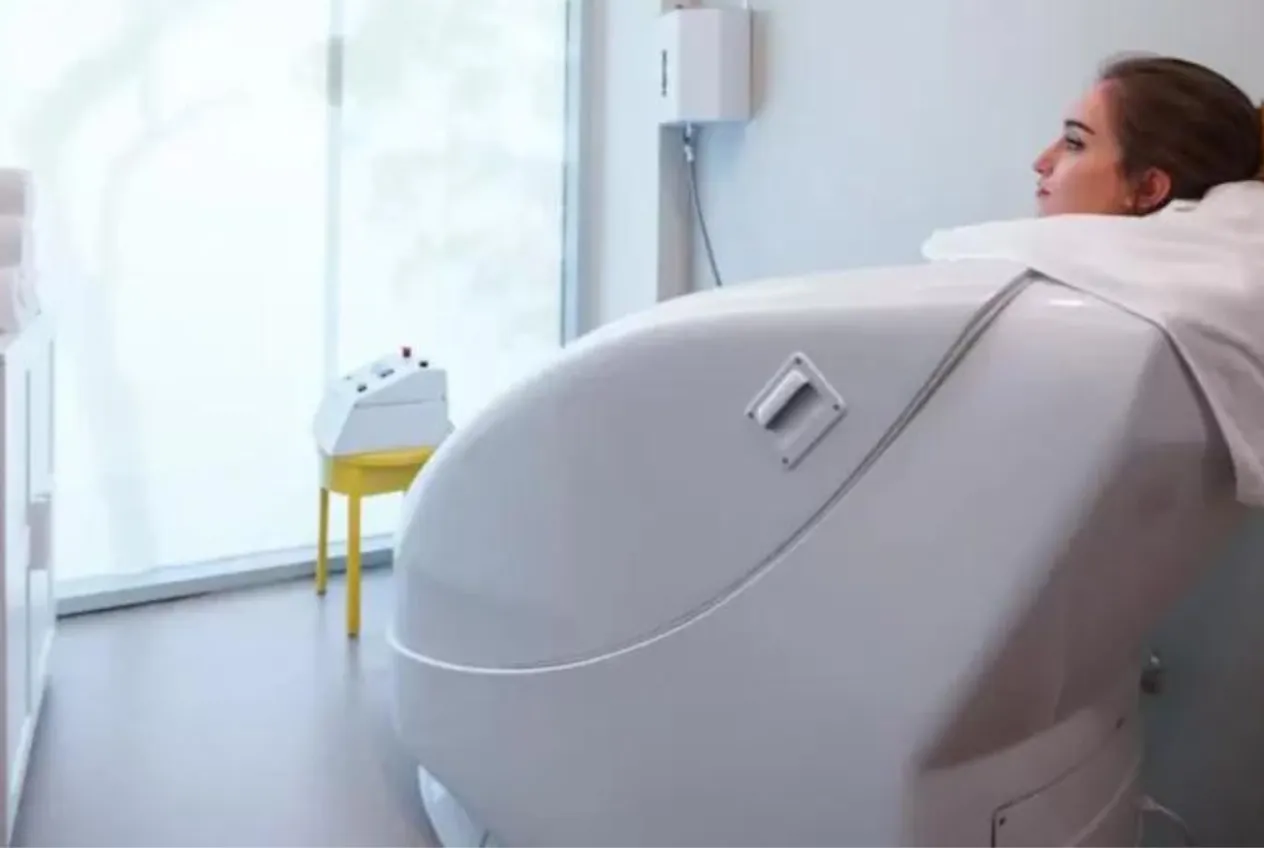
The short answer: an ozone sauna is a steam cabinet with your head outside, into which ozone is fed during a 20-30 minute session. Research is limited to small studies in healthy volunteers that show short-term changes in blood oxygen and antioxidant markers, with no side effects reported. People mostly use it for skin and general wellness, alongside other ozone methods.
Google “ozone therapy”, and one of the top results will be for ozone saunas. There are several ways to effectively administer ozone therapy, and we have explanations and protocols for all of them. But what about ozone saunas? If they're popular enough to be one of the top hits on Google, they're worth evaluating.
Learn about equipment options in our guide to home ozone therapy machines.
What are ozone saunas?
An ozone sauna can be either a hard chamber or a “tent” made of PVC and nylon. It’s designed so the user’s head sticks out to avoid any chance of ozone inhalation. Ozone is pumped into the sauna via an home ozone generator while the sauna is filled with hot steam between 103-112° Fahrenheit. Once the sauna chamber or tent reaches the optimal temperature, the user climbs in. A typical session lasts between 20-30 minutes.

Benefits of an Ozone Sauna
We try to offer a little explanation of how ozone works in each of our articles. But in case you haven’t seen any of those, here’s a refresher: ozone reacts with fats and antioxidants on the skin and in the blood, and the short-lived compounds it forms act as signals that switch on the body’s own antioxidant and repair responses (how ozone therapy works). It’s not a drug that forces something to happen in your body. Instead, it works with your body’s natural functions to:
- Improve oxygen efficiency,
- Regulate the immune system,
- Optimize blood circulation
- Encourage the body’s natural detoxification ability
- Reduce inflammation
- Rejuvenate the skin and healing
- Improve lymphatic flow
Uses for Ozone Saunas
- Beauty Care - People use ozone saunas for skin care and anti-aging; studies have not yet measured effects on collagen or skin
- Skin Issues - Used for skin problems; may help reduce infections and speed healing
- Chronic Disease - May be useful in some chronic disease by improving oxygenation and detox
- Detoxification - Used to support the body’s own detox pathways, aiming at a healthier terrain to age gracefully
- Joint pain - Improve circulation and cut inflammation of a painful joint

Safety of Ozone Saunas
The safety of ozone therapy has been well established through extensive research in the USA, Europe, and Cuba. Serious side effects are rare when it is done correctly (see our ozone therapy safety page).
However, you cannot breathe ozone gas due to the lack of antioxidants in your lungs. Ozone interacts directly with the lungs, causing irritation. But it can be safely applied to other parts of the body.
More specifically on ozone saunas, Dr. Emma Borrelli wrote in one study:
“It is useful to remember that oxygen-ozone for topical cutaneous use, by applying bags to the lower limbs in case of atrophic ulcers and in localized infections, is used by many decades in Europe, and that during these treatments no skin damage has ever been reported due to the contact of ozone with the skin.”
Does an Ozone Sauna Benefit the Entire Body?
In the very recent past, most believed ozone was unable to penetrate the skin layer unless the skin was already opened with a wound, burn or something similar (which is how ozone limb bagging and ozone cupping work).
But ozone sauna proponents claim that the heat and humidity from the steam opens the pores of your skin, allowing your skin to absorb the systemic benefits of ozone into your body.
Research in this area is still needed. While there is some indication of a full body benefit, it doesn’t appear to be a replacement for IV ozone, rectal ozone therapy, or vaginal insufflation.
Some practitioners believe ozone saunas help with detox more than a standard sauna, but this has not been studied.
Dr. Emma Borrelli, a scientist who studied directly under Dr. Velio Bocci — the father of ozone therapy — wrote an interesting study on the use of ozone saunas (Borrelli, 2021).
“its use appears promising in the course of:
a. diseases of the musculoskeletal system
b. as an immune adjuvant in neoplasms
c. peripheral arteriopathies
d. ulcers
e. dermatitis, psoriasis, high severity lipodystrophy
f. chronic degenerative diseases (COPD, neurodegenerative
diseases)”
In the study, 15 healthy men sat in an ozone sauna cabin for 20 minutes, and 6 others did the same with oxygen alone. In the ozone group, venous oxygen rose for about an hour, and antioxidant and oxidation markers rose briefly before returning to normal, a pattern similar to IV ozone. No side effects were seen.
The authors think the ozone itself doesn’t pass through the skin. Instead, compounds formed on the skin (lipid peroxides and reactive oxygen species) are absorbed by the body, causing a systemic reaction.
Research is still needed on ozone saunas and is somewhat inconclusive. At this time, we do not believe it is a replacement for IV, rectal, or vaginal ozone therapies because those have much more research behind their mechanism and benefits.
However, ozone saunas may have a greater effect on anti-aging and beauty care for the skin.
Problems with Some “Ozone Sauna” Equipment
One issue with ozone is that it is unstable and wants to revert back into oxygen. This happens relatively quickly at room temperature.
The more heat and humidity present, the faster the ozone will revert to oxygen.
Ozone breaks down faster in heat, and ozone production is reduced when the humidity is more than 60%.
An ozone sauna has a relatively tremendous amount of heat and humidity, so the heat, humidity and ozone flow need to be balanced, as purpose-built cabinets aim to do.
More research is needed to determine the optimal piece of equipment for an ozone sauna. However, we want to let you know that not all ozone saunas actually deliver ozone to the skin.
As of now, we believe a standard portable sauna with a medical grade ozone generator is the best route.
Side Effects
The small studies of ozone saunas reported no side effects, and serious harm has not been reported. These are things you may experience with an ozone sauna:
- Rashes
- Itching
- Pimples
Typically, these responses from an ozone sauna stem from one of two things:
- A dose that is too strong for your skin.
- Ozone sauna therapy sessions that are too frequent or long.
You can reduce the frequency and duration to avoid these effects. If it’s too uncomfortable, stop. Don’t push through a rash as a sign of “detox”: treat it as a sign to back off. Stop and see a clinician if a rash spreads, blisters or doesn’t settle within a few days, or if you get chest tightness, coughing or shortness of breath (a sign ozone was breathed in).
Ozone steam saunas and HOCATT: how they differ
Most ozone saunas are steam cabinets: a hard chamber or a soft tent, a steam source, and an ozone generator feeding ozone into the cabinet while your head stays outside. HOCATT is a brand of hard-shell cabinet that combines steam and ozone with other add-ons such as carbonic acid (CO2), and it is usually found in clinics and spas. Portable tents cost far less and are what most people use at home.
The side effects are the same for both: skin redness, itching or pimples if sessions are too strong or too long, and lung irritation if ozone leaks around the neck and is breathed in. No study has compared HOCATT with a portable steam sauna, so the choice mostly comes down to budget and where you want to use it.
What a typical ozone sauna session looks like
Most ozone saunas enclose your whole body up to the neck, and many keep your hands inside, so plan on a family member or staff member to help.
- Before: come well hydrated. Skip high-dose antioxidants such as vitamin C or N-acetylcysteine for 4–6 hours beforehand, since they can blunt the ozone reaction.
- Pre-heat: the steam generator warms the chamber first.
- Seal: you sit inside with as much skin exposed as you are comfortable with, and your helper closes the chamber and seals around your neck with ozone-resistant pads or wet towels.
- Session: the ozone generator runs while you sit for 20–30 minutes. Keep sipping water or electrolytes.
- Finish: the steam tapers off and the ozone is vented through a destruct unit before the chamber is opened. Then dry off and get dressed.
Safety features to look for in an ozone sauna
Ozone is not safe to breathe, which is why a regular steam or infrared sauna should not be rigged up with an ozone line. A safe setup has:
- A sealed chamber that keeps the ozone around your body and away from your face. Use the room with good ventilation anyway, since small leaks happen.
- An ozone destruct (neutralizing) unit that clears leftover ozone from the chamber at the end of each session, before it reaches the room.
- Built-in steam for steady heat and humidity. Moist skin reacts with ozone more consistently.
- A medical-grade ozone generator fed with oxygen from a tank or an oxygen concentrator, not room air. A concentrator is fine for ozone saunas. Air-fed generators also make nitrogen oxides.
- Ozone-resistant materials in every part that touches ozone: tubing, seals, fittings and the chamber itself (for example silicone, glass, stainless steel or ozone-rated plastics). Other materials break down and can leak.
Cost of an Ozone Sauna Therapy Session
Ozone sauna therapy sessions are commonplace in beauty spas and medical centers. Typically you will see a price range of $50 - $150, but it may venture outside of that depending on where you’re located and the type of facility you’re in.
Cost of Ozone Sauna Therapy Equipment
As of now, the total cost of getting set up with ozone therapy equipment is about $3,000 - $15,000 depending on the ozone sauna you get.
Protocols and precautions for ozone sauna therapy
Protocol
There is no official documentation by the scientific ozone organizations on how frequently to do ozone sauna therapy. However, a general consensus of clinical application includes:
- Up to 2-3x per week. There is still benefit in any amount of ozone sauna therapy but it compounds with at least 6-10 treatments.
- 20-30 minutes per session
Precautions
- Don’t breathe ozone. Wear a carbon-filter mask to avoid inhaling the ozone during your ozone sauna session.
- If a skin rash, itching, or pimples are found, reduce the frequency or duration of your sessions. If your symptoms are severe, stop until they subside, and restart at a shorter session.
Final thoughts
A lot of research is still needed before we can officially dub ozone sauna therapy as truly systemic. That being said, there are many anecdotal reports of whole-body benefits from ozone saunas, and Dr. Borrelli’s small study points the same way.
Whether or not it turns out to be truly systemic, many people find it a comfortable, easy way to add ozone to their routine, especially for the skin. As with every therapy on this website, this is not intended as medical advice. Always consult your doctor before attempting this or any other ozone therapy.
Full protocol
Ozone Sauna Protocol
Concentration, session length, temperature, equipment and safety for the ozone sauna.
See the full protocol →Frequently asked questions
What is an ozone sauna?
An ozone sauna is a heated chamber or tent that exposes the body (with the head outside) to ozone gas combined with steam, typically at 103–112°F, for 20–30 minutes, allowing topical and transcutaneous ozone application without inhalation.
What are the benefits of ozone sauna therapy?
Reported benefits include improved oxygen efficiency, immune regulation, enhanced circulation, detoxification support, reduced inflammation, improved lymphatic flow, skin rejuvenation, and support for wound healing.
What conditions are ozone saunas commonly used for?
Ozone saunas are commonly used for beauty and skin care, skin infections, joint pain, detoxification support, circulation issues, and as an adjunct approach in some chronic conditions by improving oxygenation and detox pathways.
Are ozone saunas safe?
Yes, when used correctly. Ozone should never be inhaled, but topical ozone sauna use has been employed for decades with a strong safety record. Users keep their head outside the chamber to prevent inhalation.
Can ozone sauna therapy provide systemic benefits?
Research suggests ozone saunas may create systemic effects through ozone-derived compounds absorbed via the skin, though evidence remains inconclusive and they are not considered a replacement for IV, rectal, or vaginal ozone therapies.
What are the side effects of ozone sauna therapy?
Possible side effects include skin rashes, itching, or pimples, usually a sign that sessions are too strong, too frequent or too long. Reducing frequency or duration typically resolves symptoms.
How often should ozone sauna therapy be done?
A commonly used guideline is up to 2–3 sessions per week, lasting 20–30 minutes each, with cumulative benefits often seen after 6–10 treatments.
Methods, equipment and safety basics in one place. We send it to your inbox.
Check your inbox: your free guide is on its way.
Something went wrong. Please try again.