
Ozone Therapy for Autoimmune Diseases

People without an autoimmune disorder simply don’t understand what it’s like. Correctly functioning immune systems work in the background, so the only time we’re even aware something is wrong is when our immune system shows signs that it’s working. That’s when we cough, sneeze, vomit, get fevers, and so on.
For a complete overview of conditions, see what diseases does ozone therapy treat.
But for people living with an autoimmune disorder, life can become filled with constant dreadful symptoms that never seem to leave. Some autoimmune disease patients try dozens of different doctors and countless modalities clinging to the hope that maybe, just maybe, this time things will be different.
It is important that you consult with your medical practitioner before attempting any form of ozone therapy. This article is for educational purposes only. This website is not intended as a substitute for the diagnosis, treatment and advice of a qualified licensed medical professional. This site assumes no responsibility for how this material is used. The statements regarding ozone treatments have not been evaluated by the FDA.
The short answer: ozone therapy may help autoimmune disease by calming an overactive immune response and lowering oxidative stress. The strongest human trial is in rheumatoid arthritis, where rectal ozone added to methotrexate improved disease activity. For most other autoimmune conditions the evidence is early, so ozone is used alongside medical care, not instead of it.
At a glance:
- Autoimmune disorders turn the immune system against itself
- Conventional medicine manages symptoms and calms the immune system, but long-term drug use can bring side effects
- Integrative medicine has more experience treating the whole body for lasting benefit
- Many practitioners use ozone therapy as one helpful modality in part of a larger plan
- Ozone therapy for autoimmune disorder is best used consistently at home with IV supplements in the clinic
How autoimmune disorders work
The immune system is a network of organs, tissues and cells that work together to produce antibodies that fight off infection and disease. When a disease, infection, or other harmful group of cells is introduced into the body, antibodies produced by the immune system attack the harmful antigens.
But an autoimmune disorder turns that process on its head. Autoimmune disorders cause the antibodies designed for attacking harmful antigens to actually attack healthy cells, tissues and organs instead. This results in a host of issues, and lies at the heart of a long list of autoimmune diseases.
While autoimmune diseases are rarely deadly, they’re never a walk in the park. Some — like celiac or Addison disease — are limited to only one system or organ, while others — like SLE (lupus) — end up affecting multiple systems for nearly a total body sickness. Some infections, such as Lyme disease, can cause similar whole-body, autoimmune-like symptoms.

Conventional treatment approaches
All autoimmune diseases have the same quality that’s tricky for doctors and frustrating for patients: there is no cure for any autoimmune disorder. The way this problem is approached is what separates conventional medicine from integrative medicine.
The conventional approach to autoimmune disorders is generally either to manage symptoms with drugs, or to prescribe immunosuppressants that hold back the immune system. While often effective, symptom-managing drugs and immunosuppressants don't address why the immune system went off course, and long-term use can bring side effects such as a higher risk of infection. Don't stop or change prescribed medicines without your doctor.
Integrative treatment approaches
In contrast, an integrative practitioner will take a holistic approach to autoimmune treatment. This type of approach to medicine takes every aspect of health into account.
Diagnostics to consider
- A micronutrient sufficiency test such as Genova NutrEval to better understand vitamin, mineral, and essential fat deficiencies.
- A DNA PCR-based Comprehensive Digestive Stool Analysis like those from the Genova GI Effects profile for dysbiosis, parasite infections, pancreatic enzyme sufficiency, and markers of gastrointestinal inflammation
- An Organic Acids Test such as Genova Diagnostics Organix Comprehensive Profile to identify deficiencies in amino acids
- An adrenal salivary cortisol index test from a company like ZRT Laboratory to evaluate cortisol secretion patterns and hypothalamic-pituitary-adrenal axis dysfunction
These tests will be invaluable in unearthing the root causes of your illness and defining a trajectory for treatment.
Removing
It’s difficult to understand the amount of toxins and damaging cells that are introduced into our bodies through what we eat. Many integrative practitioners take a diet based approach as the foundation because gut issues (leaky gut, IBD, Crohn’s, etc.) are often associated with autoimmune disorders.
An autoimmune disorder is reacting negatively to an external “something”. So it’s important to remove the “something”. This could be food (even what is normally considered healthy), water quality, air quality, mold exposure, etc.
We recommend working with a doctor to unearth a better understanding of your root cause.
Ozone Therapy for Autoimmune Disease
Ozone therapy for autoimmune disorder is the application of medical grade ozone gas into the body. It is typically done when a small amount of ozone/oxygen gas is applied by IV, rectal, or vaginal insufflation.
Ozone therapy is primarily used in autoimmune disorders because:
- Ozone therapy causes immune modulation
- Ozone therapy decreases oxidative stress
- Ozone therapy improves oxygenation and metabolism
Before

After

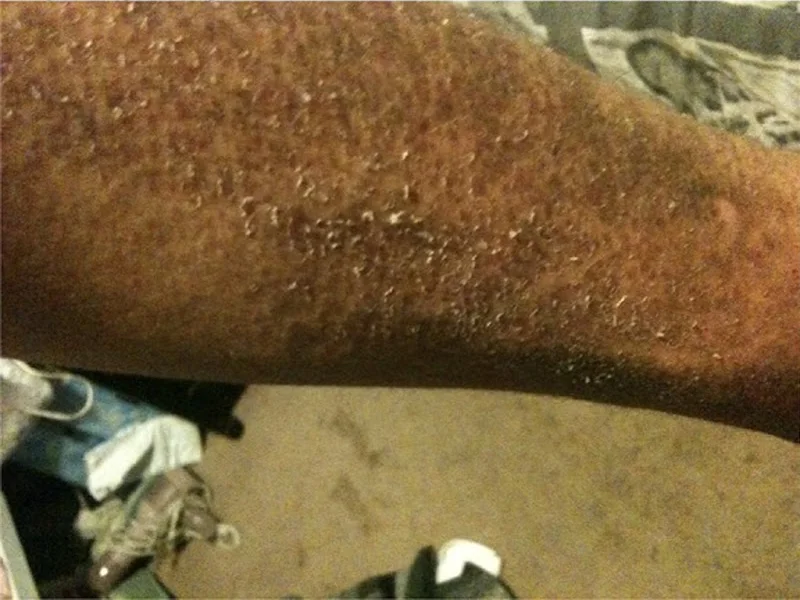
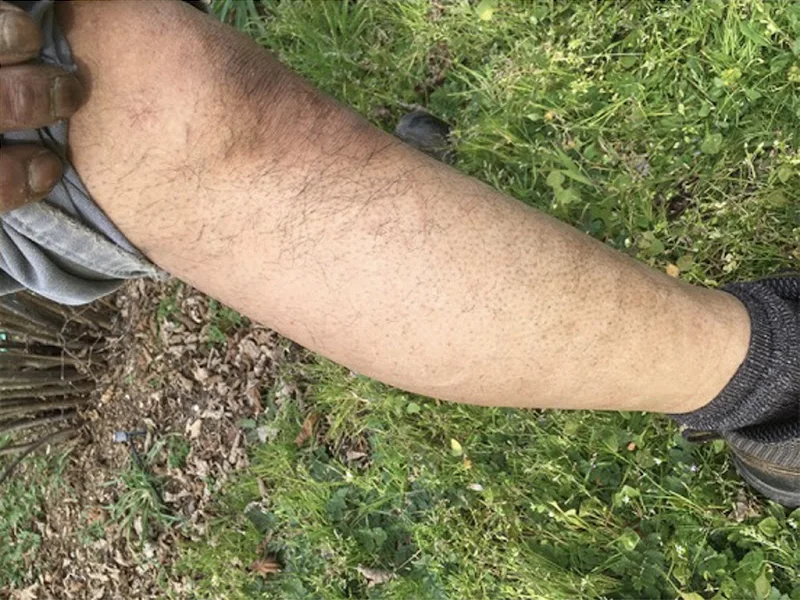
Ozone Therapy helps the immune system balance itself
An autoimmune disorder indicates the immune system is not functioning correctly and may attack the wrong cells. Ozone therapy modulates the immune system, causing it to balance out and perform appropriately. (23, 24, 25, 26, 27)
Dr. Robert Rowen demonstrated an impressive case study on a severe autoimmune disease called dermatomyositis. The patient had been receiving high doses of prednisone and other immune suppressing drugs from conventional doctors, which only resulted in adverse side effects. But by simply removing an oral infection and implementing regular ozone therapy, Dr. Rowen reported that the patient's symptoms and lab results fully normalized. This is a single case report, but a striking one. (28) Don't stop or lower prednisone or other immunosuppressants on your own; any change should be made with the doctor who prescribed them.
Ozone Therapy regulates oxidative stress
Ozone therapy helps to reduce the amount of oxidative stress in the body, a leading cause of aging and disease.

Chronic oxidative stress is found in nearly all diseases. It occurs when your body creates too many free radicals, causing damage and destruction of cells.
Poor health choices, diseases, and environmental factors can accelerate oxidative stress. This can lead to chronic inflammation, which Harvard Medical names as the cause of most chronic diseases. (12)
If oxidative stress is a key factor to chronic disease, inflammation, and aging, is there a way to reduce it?
You betcha.
According to lead researchers in this field, ozone therapy is able to not only mediate or reduce oxidative stress, but also increase oxygen efficiency, improve blood circulation, detoxify the body on a cellular level, and more. (13, 14, 15, 16, 17, 18, 19, 20)
Ozone Therapy Oxygenates The Body
The scientific community claims ozone therapy is versatile and causes a “cascade” effect of positive reactions. They also claim it increases oxygen efficiency while helping your body produce more energy. (4, 5, 6, 7, 8)
Oxygen efficiency is different from breathing oxygen. Breathing gets oxygen into your body, but oxygen efficiency describes how well you use it.
You can breathe all the oxygen you want (not a bad idea), but what’s more important for your overall health is how well your body puts that oxygen to use (oxygen efficiency). Ozone therapy may help people increase their oxygen efficiency.
What Studies Show
The best human evidence so far is in rheumatoid arthritis. In a randomized trial of 60 patients, adding rectal ozone to methotrexate for 20 days lowered disease activity (DAS28), anti-CCP antibodies and markers of oxidative damage, while methotrexate alone only showed a trend. No side effects were reported (León Fernández et al., 2016). More on this in ozone therapy for arthritis.
For other autoimmune conditions such as multiple sclerosis, lupus and Hashimoto's, we have not found controlled human trials yet. The case for ozone there rests on how it works (below), animal studies and clinical experience. That is a reason to use it alongside your medical care, and it is still a reason many people with autoimmune disease try it.
Best Way to Apply Ozone Therapy for Autoimmune Conditions
For autoimmune conditions, it’s typically best to apply a systemic form of ozone therapy (the whole body benefits). These include:
Intravenous ozone therapy needs to be done at a clinic, but vaginal or rectal ozone therapy can be done at home.
Rectal and vaginal ozone are systemic routes, and because you can do them at home, you can do them often. Many practitioners find that regular home sessions give results close to IV ozone, though the two have not been compared head-to-head in autoimmune disease. See IV vs rectal ozone.
How to Do Ozone Therapy at Home for Autoimmune Disease
To do ozone therapy at home, you will need to administer ozone therapy via rectal or vaginal ozone, starting twice a week and building up to 5 times a week. It takes about 5–10 minutes per session. Doses are on the rectal and vaginal protocol pages.
To get started:
- Download our free guide
- Get a medical ozone generator (see how to choose one)
- Follow the protocols that are in the guide
- Give it about 4 weeks of regular sessions before judging results
Cost of Ozone Therapy for Autoimmune Disease
There are a number of intravenous ozone therapies. Generally you will see a cost ranging between $200–$1,500 per treatment depending on the type and location. So typically people will spend $2,000–$20,000 for a series of IV treatments.
An entire setup for doing ozone therapy at home costs $1,400-$2,000 and can be done indefinitely. The cost per treatment becomes very low after a year or two. So it’s more valuable if you do it regularly.
Ozone Doctors for Autoimmune Disorders
Find an ozone doctor near you and see what ozone therapy costs before you book.
We recommend talking with a doctor if you’re considering ozone therapy for your autoimmune condition. If you are a practitioner who wants to offer ozone, start with the free IV Ozone 101 training.
Frequently asked questions
Can ozone therapy help autoimmune disorders?
Clinical experience and research suggest ozone therapy may help autoimmune disorders by modulating immune responses, reducing oxidative stress, improving oxygen efficiency, and supporting metabolic and mitochondrial function.
What is the best ozone therapy for autoimmune disease?
Systemic ozone therapies are typically preferred for autoimmune conditions. These include intravenous ozone therapy performed in clinics and rectal or vaginal ozone insufflation, which can be done consistently at home.
Can ozone therapy for autoimmune disease be done at home?
Yes. Rectal and vaginal ozone insufflation can be safely performed at home using medical-grade ozone generators and proper protocols, usually starting twice a week and building up to 5 times a week.
Is home ozone therapy as effective as IV ozone therapy?
Many practitioners find that regular rectal or vaginal ozone at home gives results close to IV ozone for autoimmune conditions. The two have not been compared head-to-head in autoimmune disease.
How long does it take to see results from ozone therapy for autoimmune disease?
It varies by condition and person. Plan on about 4 weeks of regular sessions before judging results.
Methods, equipment and safety basics in one place. We send it to your inbox.
Check your inbox: your free guide is on its way.
Something went wrong. Please try again.