 contact@mediskill.com
How does rectal ozone insufflation affect the gut flora?

At a Glance:
- Rectal ozone insufflation is a very powerful systemic ozone treatment, though some skeptics question if it can hurt the gut flora.
- Physiologic ozone exposure to the gut flora is below the dosage and duration that would kill a significant amount of gut microbes. Also, many microbes in persistent forms such as biofilms and spores will survive brief ozone treatment.
- A 2025 mouse study confirms clinical anecdotes that ozone rectal therapy improves the gut flora. Also, other health benefits of ozone therapy, such as cardiovascular and metabolic improvements, may be mediated through the gut flora.
- Ozone rectal therapy likely improves the gut flora through jumpstarting mitochondrial function and oxygen consumption in the gut barrier.
Rectal ozone insufflation might be one of the most powerful systemic ozone treatments because it can easily be done from home on a consistent basis once you have a home ozone setup. For many chronic conditions, consistency is key in reaping the benefits of ozone therapy. This is where ozone rectal insufflation wins.
Since recent research shows that the gut flora in your large intestine influences nearly all aspects of health, you may be concerned about how ozone rectal insufflation affects the gut flora. While there is no direct evidence, both physiologic knowledge and clinical anecdotes suggest that rectal ozone insufflation tends to have a net positive effect on your gut flora. In addition, some of its benefits, such as inflammation modulation and autoimmune disease improvements, could be mediated through these positive changes in the gut flora.
Doesn’t rectal ozone insufflation kill gut bacteria?
Ozone is a broad-spectrum antimicrobial gas that can kill any microbe on contact, according to test tube estimates.
For reference, rectal insufflation treatments can use ozone at concentrations of approximately 20–40 µg/mL. These are concentrations that can kill or inhibit some gut bacteria that are exposed to the gas.
In a dentistry study, 20 µg/mL of ozone gas for 80 seconds reduced Lactobacillus casei from 1,000,000 to 10 colony forming units (CFU) [1]. Another study found that water-solubilized ozone at 0.5–5 µg/mL significantly reduced the survival of L. plantarum and other lactobacilli [2].
Many beneficial gut bacteria like bifidobacteria and Akkermansia strongly dislike oxygen [3]. Also, numerous other gut bacteria species have yet to be studied as microbiologists are still figuring out the right growth conditions. Pendulum, one of the first manufacturers of Akkermansia consumer probiotics, claims that it took them a great deal of effort to ensure that all their supply chains and packaging completely shield their bacteria from oxygen in order to ensure their survival. Therefore, the introduction of oxygen-ozone to the large intestine may kill off a significant amount of bacteria of these species.
Why rectal ozone insufflation may not kill as many gut bacteria as test tube data suggests
A whole person’s gut is much more complex than a test tube. The gut flora, for example, is far from a uniform liquid culture of bacteria, which explains why the general conception of “ozone kills gut bacteria” isn’t as simple as it seems.
Instead, your gut flora is more like a multi-layered tropical rainforest with many different micro-niches, while the food and gut content flow over them. For example, the bacteria in the crypt of your villi or in the mucin layer will be different from those outside the crypt. This complexity generates emergent properties greater than the sum of their parts.
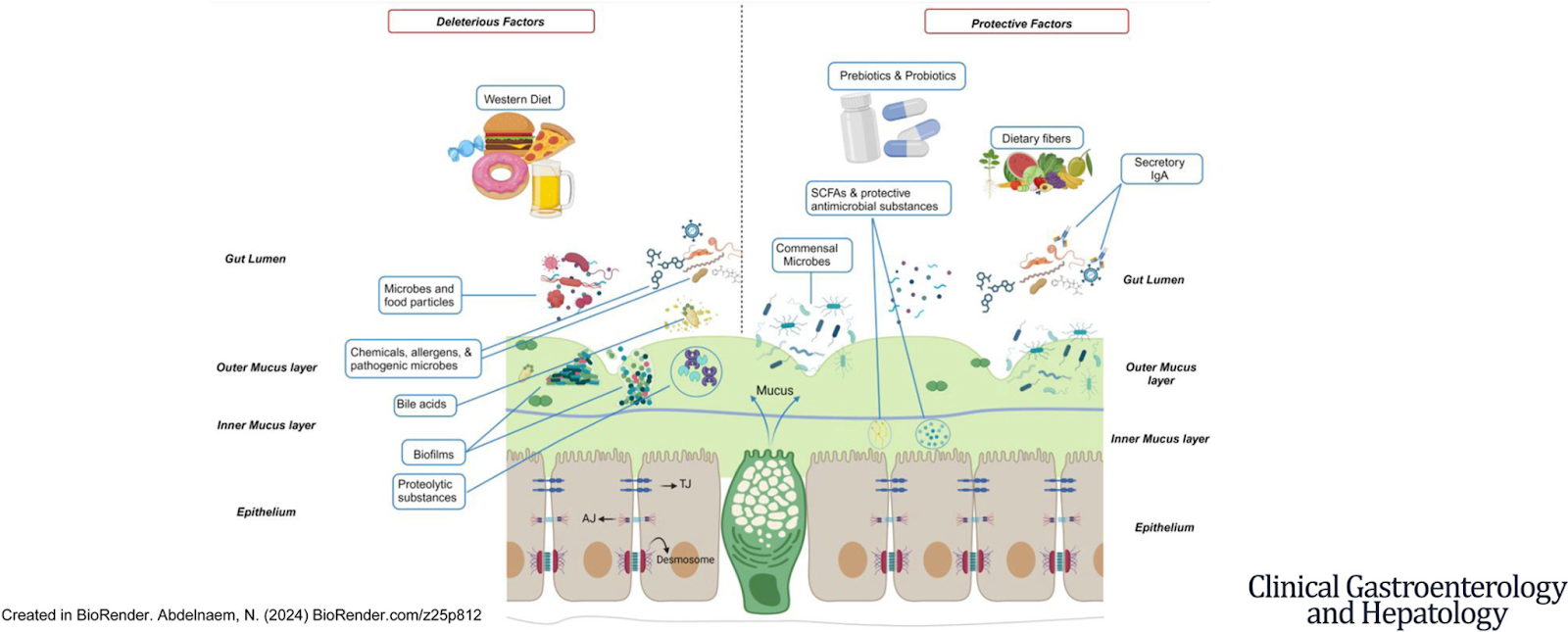
- Gut microbes can exist in many forms
Most microbiologic studies of gut microbes and probiotics are done on free-flowing and metabolically active microbes, not in biofilms or spore forms.
Bacteria can live in two forms: planktonic and biofilm forms. Planktonic refers to the free swimming form, while biofilms refer to more stationary bacteria that embed themselves in gel-like protective matrix.
To date, there’s been no exact measure of what percentage of gut bacteria could be in planktonic or biofilm forms at any given time. It’s estimated that 40–80% of human gut bacteria could be in biofilms, which tend to house many species at the same time [4]. These biofilms could be good or bad, depending on which species live in them.
The biofilms protect the microbes from antimicrobials, including ozone.
Test tube data from pathogenic biofilms suggest that you may need to expose the biofilms at 25–50 µg/mL ozone gas for 1–6 hours to fully destroy the biofilms [5], [6], [7]. Whereas for ozone water, the exposure time may be 2–20 minutes at 2–9 µg/mL concentrations [8].
Note: When you treat infections on your body with ozone, your exposures are typically much shorter than this because typical therapeutic doses of ozone may only weaken the biofilms and pathogens. This allows your immune system and medications to access the pathogens.
Some gut microbes, like Bacillus and Clostridium species, can also be present in endospores (commonly called “spores”). This is a dormant state where the bacteria has lower metabolic activity and thicker, stronger cell walls. About 50% of your gut bacteria have genes that make them capable of forming spores after exposure to stress [9]. The spore form would also protect them from ozone during a rectal ozone treatment.
You also have other types of gut microorganisms, like fungi, protists, and archaea which can be in biofilms or other persistent states that protect them from ozone.
- Gut flora is resilient and resists change
Your gut flora naturally does its best to stay the same. The healthier you are, the more species you tend to have, and the less likely it will change in response to stressors like ozone therapy. This is a good thing because this resistance to change protects you against pathogen invasion and diseases, while allowing the microbes to adapt to lifestyle inputs [10].
- Ozone-oxygen gas gets quickly absorbed
During rectal ozone insufflation treatments, the ozone gas reacts with the gut content. Subsequently, the oxygen and ozonated byproducts get absorbed or break down within a few minutes [11], [12]. This may leave very little gas for long enough to kill a significant number of microbes.
How does ozone therapy improve the gut flora?
Anecdotally, seasoned gut health-focused clinicians, such as Dr. Mandy Lagreca, have consistently observed that ozone can improve gut flora.
Currently, the most convincing peer-reviewed scientific proof is a mouse study published in June 2025 [13]. Researchers studied mice without the ApoE gene. The lack of ApoE predisposes them to atherosclerosis (hardening of the arteries), which is a cardiovascular condition partly mediated by both the gut flora and genetics.
18 animals were divided into three groups for 12 weeks:
- Group 1: Normal diet
- Group 2: High-fat diet with air rectal insufflation
- Group 3: High-fat diet with ozone rectal insufflation (20 µg/mL at 1 mg/kg bodyweight)
Ozone (group 3) or air (group 2) treatments were delivered every other day from the fifth week, for a total of 8 weeks.
Upon profiling the mice for metabolic markers, metabolites, and gut bacteria (with 16S rDNA sequencing), the researchers found that the ozone treatment:
- Reduced serum LDL-C by 29.6%, along with lipid and plaque areas in the arteries of these mice.
- Improved the gut flora imbalance caused by the high-fat diet, resulting in higher diversity and richness of the gut flora.
- Increased beneficial microbes like lactobacilli and bifidobacteria.
- Increased short-chain fatty acids like propionate and butyrate.
- Decreased harmful microbial metabolites such as trimethylamine (TMA) and trimethylamine-N-oxide (TMAO) that can contribute to cardiovascular risk.
Ozone therapy improves your gut terrain
You have a two-way relationship with your gut flora. While these microbes can significantly impact your health, your body and health status determine which species can stay or dominate in your gut through many factors. Factors like diet, inflammation levels, and mindset can modify your gut flora significantly more than any probiotics can.
A very interesting study published in Science (2018) was titled “Colonocyte metabolism shapes the gut microbiota” [14]. While the study has nothing to do with ozone therapy, it explains the most likely mechanism by which ozone can be so helpful. Here, the biggest mediators could be oxygen and mitochondrial function. This can explain why some people with chronic health issues can’t heal their gut from probiotic supplements alone; their terrains need a reset.
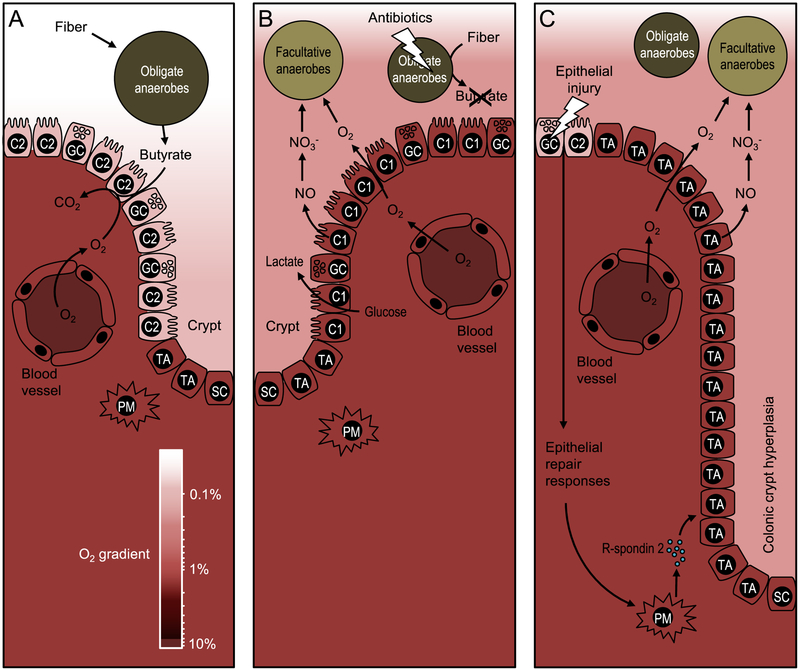
If your gut barrier is healthy, its mitochondria function well and use up all the oxygen. This creates an oxygen-free environment that fosters healthy bacteria such as bifidobacteria and Akkermansia. These are obligate anaerobes that dislike oxygen.
If your gut barrier is inflamed, its mitochondria can naturally malfunction, leaving oxygen around. As a result, obligate anaerobes die or go dormant, while oxygen-tolerant species like Enterobacter thrive. This allows for dysbiosis to occur.
Similar links between mitochondrial dysfunction and disease states exist with immune cells during inflammation and in tumor cells (where it’s called the Warburg effect). Interestingly, pathogenic microbes like salmonella and parasites can hijack your defense systems, including both immune cells and gut barriers, to allow for chronic infections [14].
Introducing ozone-oxygen for a short burst doesn’t only shake up the bacteria; it jumpstarts the mitochondria and oxygen consumption. When the gut lining mitochondria consumes all the oxygen and starts to reseal itself, they create a terrain more suitable for a healthier gut flora.
In conclusion, rectal ozone insufflation can be a helpful part of any gut protocol, given that there is no contraindication and doses are titrated properly. Rectal ozone insufflation is a very safe treatment, but you should always start with the right medical supervision, especially if you’re sensitive or have chronic health issues.
References
1 Santos, M., Leandro, F., Barroso, H., Delgado, A. H. S., Proença, L., Polido, M., et al. (2024) Antibacterial effect of ozone on cariogenic bacteria and its potential prejudicial effect on dentin bond strength-an in vitro study. Pharmaceutics, MDPI AG 16, 614
2 Naito, S. and Sawairi, A. (2000) Ozone inactivation of lactic acid bacteria. Biocontrol Sci., The Society for Antibacterial and Antifungal Agents, Japan 5, 107–110
3 Boyanova, L., Boyanova, L., Hadzhiyski, P., Gergova, R. and Markovska, R. (2024) Oxygen tolerance in anaerobes as a virulence factor and a health-beneficial property. Anaerobe, Elsevier BV 89, 102897
4 de Vos, W. M. (2015) Microbial biofilms and the human intestinal microbiome. NPJ Biofilms Microbiomes, Springer Science and Business Media LLC 1, 15005
5 Catania, A. M., Dalmasso, A., Morra, P., Costa, E., Bottero, M. T. and Di Ciccio, P. A. (2025) Effect of gaseous ozone treatment on cells and biofilm of dairy Bacillus spp. isolates. Front. Microbiol., Frontiers 16, 1538456
6 Piletić, K., Kovač, B., Perčić, M., Žigon, J., Broznić, D., Karleuša, L., et al. (2022) Disinfecting Action of Gaseous Ozone on OXA-48-Producing Klebsiella pneumoniae Biofilm In Vitro. Int. J. Environ. Res. Public Health 19
7 Panebianco, F., Rubiola, S., Chiesa, F., Civera, T. and Di Ciccio, P. A. (2021) Effect of gaseous ozone on Listeria monocytogenes planktonic cells and biofilm: An in vitro study. Foods, MDPI AG 10, 1484
8 Marino, M., Maifreni, M., Baggio, A. and Innocente, N. (2018) Inactivation of foodborne bacteria biofilms by aqueous and gaseous ozone. Front. Microbiol., Frontiers 9, 2024
9 Koopman, N., Remijas, L., Seppen, J., Setlow, P. and Brul, S. (2022) Mechanisms and applications of bacterial sporulation and germination in the intestine. Int. J. Mol. Sci., MDPI AG 23, 3405
10 Caballero-Flores, G., Pickard, J. M. and Núñez, G. (2023) Microbiota-mediated colonization resistance: mechanisms and regulation. Nat. Rev. Microbiol., Springer Science and Business Media LLC 21, 347–360
11 Bocci, V., Zanardi, I. and Travagli, V. (2011) Important details to be clarified about the effect of rectal ozone on the portal vein oxygenation: Letter to the Editors. Br. J. Clin. Pharmacol., Wiley 72, 350–1; author reply 352
12 Knoch, H. G. and Klug, W. (1990) Ozone-oxygen therapy in proctology. Ter. Arkh., Ter Arkh 62, 93–98
13 Li, R., Wang, Y., Ji, X., Han, Q., He, K., Zhao, H., et al. (2025) Ozone rectal insufflation inhibits the development of atherosclerosis in ApoE-/-mice, which is mediated by the regulation of gut microbiota and metabolites. Front. Microbiol., Frontiers 16, 1597695
14 Litvak, Y., Byndloss, M. X. and Bäumler, A. J. (2018) Colonocyte metabolism shapes the gut microbiota. Science 362
Get Started with Ozone
.png)

