 contact@mediskill.com
Ozone Sauna Therapy: The Future of Wellness

At A Glance:
- Ozone saunas are an innovative wellness modality that combines steam sauna with ozone-oxygen exposure.
- Although evidence is limited, ozone saunas deliver deep detoxification and anti-inflammatory benefits due to the synergy of many hormetic modalities.
- Benefits of ozone saunas include relaxation and euphoria, improved energy, skin rejuvenation, and lipolysis (fat burning).
- An ozone sauna must be made of ozone resistant materials and have safety features that seal ozone in the chamber, preventing ozone gas inhalation.
- The immediate benefits of ozone sauna, along with long-term conditioning that can deliver cosmetic, mitochondrial, and immune balance benefits, make it a perfect add-on to any spa or holistic clinic.
The ozone sauna is an innovative wellness modality that combines traditional steam sauna with safe and beneficial ozone-oxygen exposure on the skin. The cutting-edge therapy delivers synergistic effects of heat, steam, and therapeutic ozone-oxygen for deep relaxation and numerous other health benefits.
This article will share ozone sauna’s benefits and explain why the saunas are a perfect fit for any wellness business or longevity clinic.
What Is an Ozone Sauna and How Does It Work?
Ozone sauna therapy takes place in a specially designed steam chamber that encloses your [1]body from the neck down. The sealed sauna chamber provides a precisely controlled environment of warmth, humidity, and therapeutic ozone-oxygen mix. Your head remains comfortably outside the chamber, ensuring you can safely breathe room air as you enjoy the treatment.
At the skin level, an ozone sauna session leads to the following:
- More blood flow to the skin and limbs due to increased heart rate and heat. This can aid lymphatic drainage and detoxification.
- Antimicrobial properties due to ozone-oxygen mix, which help rebalance the skin flora [1].
- Enhanced skin metabolism as some oxygen gas diffuses through shallow layers of the skin [2].
- More visible heavy metal and other toxins in your sweat as they get oxidized by ozone, creating black sweat deposits. This also prevents toxin reabsorption.
- The ozone-oxygen exposure in the steam and heat activates some skin rejuvenating processes.
Beyond skin deep, ozone saunas deliver some beneficial whole-body oxidative effects. While some oxygen can get absorbed through the skin, the ozone gas cannot penetrate the skin barrier. Instead, the ozone oxidizes lipids, water, and other molecules in your skin's outermost layer, generating secondary compounds such as ozonides and other specialized signaling molecules [3].
These newly formed compounds are far more stable than ozone gas itself and act as sophisticated messengers throughout your body. They can also get absorbed through the skin into the bloodstream. Rather than causing more oxidation, the compounds actually trigger your body's own antioxidant systems, fat burning, and cellular renewal pathways. It can be like giving your cells a gentle wake-up call to optimize their natural functions.
During and after your ozone sauna session, these signaling molecules, along with heat and steam exposures result in:
- Activation of powerful antioxidant pathways and detoxification through Nrf2 [4].
- Improved circulation and blood vessel health through heat and nitric oxide in your blood vessels [4].
- More robust but better-balanced immune response [3].
- A sense of euphoria due to endorphins and brain-derived neurotrophic factor (BDNF) [5], which may also be enhanced with the right ambience, essential oils, or music.
- Some effects similar to exercise, such as burning 200–400 additional calories as the body works to dissipate the heat and improved mitochondrial function [6].
- Increased fat burning and toxin releases as some ozonation byproducts increase fat breakdowns (lipolysis) from fat cells [7, 8].
A Typical Ozone Sauna Session
Many sauna chamber models close your entire body and hands inside, so you’ll need a family member or spa staff to assist with your sauna sessions. It’s a good idea to come hydrated with electrolytes and binders before the session. Avoid high-dose antioxidants, such as vitamin C or N-acetylcysteine 4–6 hours prior to the session [9].
- Pre-heating: You’ll turn on the steam generator to pre-heat the sauna chamber. Some people also like to add essential oils for additional benefits.
- Entering the sauna: You’ll walk into the sauna and take a seat comfortably. It’s advisable to remove clothing to maximize skin exposure to ozone and steam, but bathing suits or underwear are also acceptable.
- Closing and sealing the saunas: Your companion will close the sauna doors and seal around your neck with ozone-resistant pads and towels.
- Enjoy the sauna session: The ozone generator starts as the sauna fully heats up in the enclosed chamber as you relax and enjoy the 20–40 minute session. Stay hydrated by continuing to drink water or electrolytes. Your companion may also assist with drying off sweat and keeping you comfortable. You may also enjoy relaxation music and ambience to further boost the benefits.
- End of the session: The steam production tapers off and the chamber cools down as the ozone vent turns on, removing ozone from the chamber. When this process is complete, you can then open the chamber, exit, dry your body off, and get dressed.
- Post-sauna session: It’s advisable to avoid showers or bathing within 2–3 hours after an ozone sauna session to allow the body to continue absorbing the ozonated byproducts on your skin. As the ozone and ozonated byproducts have antimicrobial and cleansing effects, most people continue to feel light, fresh, and clean after the sauna sessions.
Ozone Sauna Benefits: Fascinating Science
Currently, there is limited clinical evidence specific to ozone saunas, with only a handful of clinical trials published to date. However, we can reasonably extrapolate based on a lot of what we already know from traditional saunas and the known physiologic changes from ozone sauna studies.
Antioxidant Balance
During an ozone sauna session, ozone oxidizes water and fat molecules in your skin, creating hydrogen peroxide and lipid ozonation products (LOPs), such as 4-hydroxynonenal (4-HNE) and 4-hydroxyhexenal (4-HHE) [9]. These molecules can get absorbed through your skin and into the bloodstream and various tissues.
Once absorbed, these ozonized molecules don’t directly cause oxidative stress in the body. Instead, they activate the body’s antioxidant defenses through Nrf2 and various cascades of beneficial reactions throughout your body.
Relaxation and Wellbeing
Ozone sauna sessions can deliver a temporary euphoric and relaxation experience, even though the most scientifically backed explanation for this is that your body is being stressed physiologically in a similar way to exercise.
The post-ozone sauna glow may relate to brain benefits similar to those produced by exercise, such as increasing endorphins and brain-derived neurotrophic factor (BDNF). Sauna studies and molecular evidence suggests that ozone saunas may increase these molecules.
BDNF is a protein involved in synaptic plasticity, stress resilience, quality sleep, and mood [5]. The ozone-induced 4-HNE can enter the brain where it activates Nrf2, which can boost BDNF gene readouts in the brain, especially in the hippocampus [10, 11].
Sauna heat can elevate endorphins and dopamine, your euphoric and reward neurotransmitters, through pituitary stimulation and activation of the sympathetic nervous system [12].
Moreover, a placebo-controlled infrared sauna study provided the strongest evidence for the antidepressant benefits of temporarily increasing body temperature. This finding was so groundbreaking that it’s published in JAMA Psychiatry.
A 6-week randomized controlled trial treated 16 depressed adults with a gentle infrared sauna at 41oC until their core body temperature reached 38.5oC. Sessions lasted 81–140 minutes, followed by a 60-minute cooldown. In comparison, 14 adults received placebo treatments identical in appearance, but without the infrared heat. The researchers observed significant improvement in depression scores in the treatment group compared to placebo. This improvement lasted as long as 6 weeks after the intervention [13]. The researchers believe that the heat may activate certain brain areas related to pleasure.
Detoxification
Sweating typically helps excrete harmful heavy metals, along with organic pesticides, phthalates, and flame retardants [14, 15].
Ozone saunas provide a triple punch with the detoxification effect because most such toxins are stored in fat cells. Lipid oxidation byproducts (LOPs) like 4-HNE stimulates fat breakdowns and releases stored toxins from fat cells, further aiding detoxification beyond typical saunas and infrared saunas [7].
Unlike typical sauna sessions where you should immediately shower to minimize toxin reabsorption, ozone saunas typically oxidize and break down these toxins on your skin. This explains why you may see black sweat after using the saunas, as the sweated metals oxidize. It’s also beneficial to delay taking a shower for a few hours to allow more LOPs to absorb into your skin after the saunas.
Inside your body, Nrf2 activation increases readouts of genes that assist in Phase 2 liver detoxification [16].
Ozone saunas can be a potent detox support modality. While detox or Herxheimer reactions from ozone saunas are very rare, it’s a good idea to start low and titrate the ozone dose if you’re sensitive.
Calories Burned
Heat exposure can raise your heart rate as your body attempts to dissipate heat, generating some benefits similar to exercise. Both heat and small amounts of oxidative stress can also temporarily boost mitochondrial function, which may help you burn a few more calories.
In a clinical study of young sedentary and overweight men, 4 sessions of 10 minutes of 90oC (194oF) dry sauna use resulted in 400–600 additional calories expended [17]. With lower temperature exposure and a typical session of 25–35 minutes, an ozone sauna session may burn an extra 200–400 calories [6].
Also, since LOPs stimulate fat breakdown [7], more of these calories may come from stored fat than with other types of sauna therapies.
Immune Boost and Balance
Our skin functions as an active immune organ populated by keratinocytes, Langerhans cells, mast cells, and resident immune mediators that continuously sample environmental inputs [18].
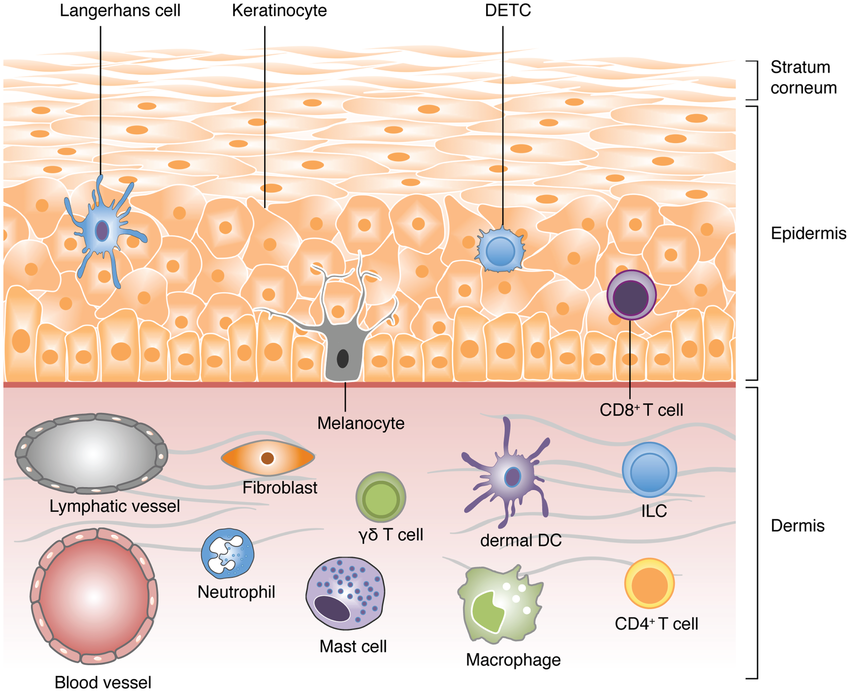
Image source [19]
When ozone-derived lipid oxidation products are generated at the skin surface, they can influence how these cells sense and calibrate immune activity.
At low, controlled levels, the oxidative signals produced during an ozone sauna act as danger-adjacent but non-damaging cues.
These redox cues can prompt immune cells for better surveillance, communication, and balance. In other words, this brief oxidative stress makes your immune system more ready and adaptable, rather than overworked.
The heat also helps integrate immune signaling with broader stress-adaptation pathways that affect the immune system [20], including:
- Mildly reducing Tumor Necrosis Factor (TNF), a pro-inflammatory cytokine involved in cell death [21]
- Increasing interferon-γ (IFN-γ), an immune-activating cytokine by 10-fold when the body is heated to 39oC [22]
A crossover placebo-controlled study evaluated the effect of a 20-minute ozone-oxygen steam sauna session compared to a sham treatment with oxygen alone [3].
Participants completed both ozone and sham steam saunas, separated by a 3.5-month washout period. Compared with oxygen alone, O₂–O₃ exposure produced statistically significant increases in:
- Body temperature
- Venous partial pressure of oxygen
- Thiobarbituric acid reactive substances (TBARS), indicating increased lipid peroxidation
- Interleukin-8 (IL-8) levels, reflecting immune signaling activation
The rise in TBARS and concurrent protein oxidation indicated the absorption of secondary oxidation products into the bloodstream, rather than direct ozone penetration.
Despite oxidative and mild inflammatory changes, no adverse clinical effects were observed following a single exposure. Cardiovascular, liver, creatine, blood gas, and hematologic markers remained within normal ranges.
These findings suggest that ozone sauna exposure can act as a biological response modifier, engaging redox and immune signaling pathways through the skin.
Mitigates Inflammation
LOPs on the skin surface can activate gene readouts and enzymes that modulate cytokines. This can shift cells toward a state that favors resolution and balance rather than chronic activation.
LOPs support inflammatory balance rather than turning off all the inflammation. Heat also modulates immune cell trafficking, cytokines, and heat-shock protein expression, all of which alter inflammation [23, 24].
Heat-shock proteins, in particular, serve as molecular chaperones to help cells tolerate and recover from inflammatory stimuli more efficiently [24].
A pilot study evaluated whether ozone sauna therapy (OST) combined with pulsed electromagnetic field therapy (PEMF) could reduce chronic pelvic pain (CPP) and inflammatory markers in women with endometriosis who did not respond to conventional treatments [25].
The study involved two small cohorts using the HOCATT system, which delivers transdermal and intravaginal ozone alongside PEMF.
In the first arm, eight women with endometriosis underwent six sessions over three weeks (twice weekly). In the second arm, ten women completed the same treatment protocol, with inflammatory markers measured before and after the intervention.
Results showed:
- Statistically significant reductions in pain after the fourth session (p < 0.05)
- Significant decreases in inflammatory markers, including:
- C-reactive protein (CRP) (p = 0.0438)
- Interleukin-1β (IL-1β) (p = 0.0031)
- Significant increases in interleukin-8 (IL-8) levels (p = 0.033), indicating local immune activation rather than global suppression
The authors conclude that combined OST + PEMF may function as a non-traditional anti-inflammatory adjunct, potentially improving pain and inflammatory profiles in women with endometriosis-related CPP.
As a whole, ozone saunas encourage the immune system and surrounding tissues to respond proportionately, resolve efficiently, and return to baseline once the stress has passed. This clinical study suggests that ozone saunas may also relieve other milder day-to-day inflammation such as post-exercise soreness and physical recovery.
Skin Rejuvenation
Ozone sauna exposure can support skin health through signaling-based adaptation, rather directly altering skin structure.
Ozone responses are shaped by how keratinocytes, fibroblasts, vascular cells, and resident immune cells interpret redox and thermal cues [1]. The oxygen penetrates into shallow layers of the skin, while LOPs penetrate deeper into the dermis and hypodermis layers, activating fibroblasts, growth factors, and improving microcirculation [1]. The topical ozone gas can stimulate collagen production and fibroblast growth, and thickens the dermal layer by 3.55% [26].
By activating the Nrf2 signaling pathway, LOPs also adjusts processes related to [27]:
- Barrier maintenance
- Cell turnover
- Stress resilience
These changes support a skin environment that is better able to respond to environmental challenges. Heat and steam further contribute by increasing hydration of the outer skin layers and temporarily enhancing microcirculation [28].
Oxygen exposure, and improved blood flow delivers oxygen and nutrients while facilitating removal of metabolic byproducts, creating conditions that support skin vitality.
Redox signaling also activates critical antioxidants and cellular housekeeping, which slow down skin aging and heal environmental stress exposure.
By encouraging adaptive antioxidant responses, ozone sauna can make your skin better at protecting itself from stressors like pollution, sun exposure, and temperature fluctuations. These are all factors that can be bad for skin appearance and function over time.
Circulation and Cardiovascular Health
Ozone doesn’t directly relax your blood vessels. During ozone saunas, LOPs and heat modulate a key blood vessel relaxant called nitric oxide (NO), which controls [29] [30]:
- Vascular tone (How tight your blood vessels are)
- Blood flow
- Endothelial function (The health and function of cells that line your blood vessels)
There are two different enzymes that produce NO: eNOS, which produces nitric oxide in your blood vessels, and iNOS, which produces nitric oxide that contributes to inflammation. Ozone saunas stimulate eNOS, while suppressing iNOS [30, 31].
The modern day diet and lifestyle tend to make people low in NO, such as from low vegetable intake. Ozone saunas improve the overall NO balance, creating a more adaptable and balanced cardiovascular system and blood pressure.
Heat compliments ozone by bringing blood to the skin and tiny blood vessels. This redistribution encourages shear stress along vessel walls, stimulating eNOS release [32, 33].
In ozone sauna systems that use far-infrared (FIR) emitters, infrared-mediated interactions with mitochondrial enzymes and heme-containing proteins enhance NO availability and improve microcirculation, independent of temperature [34]. When layered with ozone and heat, this further improves your cardiovascular health.
Keep in mind that these cardiovascular benefits may only last from 30 minutes to 2 hours. However, just as regular sauna bathing can lower hypertension risk by 27%, regular ozone sauna use may contribute to some long-term adaptive health benefits [35].
Hormetic Benefits
Ozone saunas are an elegant orchestration of multiple hormetic elements working in perfect harmony. It activates the body’s beautiful ability to transform gentle stressors into powerful anti-aging and vitality-enhancing responses.
The dose makes the hormesis, so you don’t want too much of one stressor. Ozone saunas combine different stressors at the same time to synergistically activate your anti-aging and resilience pathways from different angles [36]. For example, ozone activates Nrf2, while heat activates heat-shock proteins and increases heart rate, and LOPs activate nitric oxide. With ozone, oxygen, heat, and infrared (when present), the treatment can enhance everything from metabolic efficiency to mood and cardiovascular health.
FIR emitters, present in some models, influence mitochondrial signaling, nitric oxide production, and heat-shock protein expression. These effects occur independently of ozone, creating a stacked hormetic environment.
These elegant hormetic combos make the 20–30-minute ozone sauna sessions a great time investment for biohackers with busy schedules.
What Makes an Ozone Sauna a Great Modality to Add to Any Spa, Salon, or Clinic?
Like ozone therapy, ozone saunas are a profitable modality with sessions ranging from $50–$220 USD. Ozone sauna sessions sell well as multiple session packs, recurring memberships, or as an introduction service to your business. The sauna chambers have a small footprint, are easy to maintain, and make a beautiful add-on to health businesses.
As a modality that delivers relaxation, beauty, and rejuvenation from inside, ozone saunas are perfect for spa, salon, or beauty-focused clientele. In addition, as a powerful detox, mitochondrial support, and immune-balancing modality, it can boost the effectiveness of functional medicine protocols and other integrative protocols for complex conditions such as Lyme, mold, hormonal issues, and chronic fatigue syndrome.
Lastly, ozone saunas have the allure of a very powerful biohacking tool. By combining 3+ hormeses that can deliver both immediate and long-term conditioning benefits in 20–30 minutes, ozone saunas can be very appealing to biohackers of both genders.
Key Safety Features and Benefits of an Ozone Sauna
An ozone sauna use requires a specialized sealed system to ensure that ozone exposure remains controlled, skin-focused, and safe. These requirements and safety features explain why it’s unsafe to rig up an ozone sauna from regular steam or infrared saunas.
The sauna chambers and all ozone-exposed parts must be ozone resistant. In addition, you also need a mechanism to remove ozone at the end of each session to prevent ozone inhalation.
A Sealed, Ozone Containment Chamber
Ozone is not safe to inhale, so the most critical requirement is a closure mechanism that keeps ozone in the chamber. Inevitably, some small amounts of ozone can still leak into the environment, so it’s important to perform the treatment with air ventilation.
Most ozone saunas have sealed chamber doors, while using wet towels around the neck along with other soft materials for user comfort.
An Ozone Destruct or Neutralization Unit
After each session, residual ozone must be safely removed from the system. A proper at-home ozone sauna setup includes a closed ozone vent and destruct unit to remove ozone before it is released into the room.
This step is essential for maintaining indoor air quality and preventing unintended respiratory exposure after use.
Integrated Steam Generation
Steam is not simply a comfort feature; it plays a functional role in ozone sauna exposure. Humidity hydrates the stratum corneum, softening the outer skin layer, facilitating ozone-lipid reactions at the surface, and helping open the pores for LOP absorption [37].
Without steam, ozone exposure becomes less predictable and less effective at generating the secondary signaling molecules (such as ozonides).
A reliable steam source allows for consistent temperature and humidity control throughout the session.
A Medical-Grade Ozone Generator
An ozone sauna requires a generator designed for medical or therapeutic applications, capable of producing high-purity ozone from medical-grade oxygen rather than from ambient air.
Air-fed generators can introduce nitrogen oxides and other unwanted byproducts, which are inappropriate for controlled exposure [38].
Ozone-Resistant Materials Throughout the System
Because ozone rapidly degrades many common plastics, rubbers, and metals, all components that come into contact with ozone must be ozone-resistant.
This includes tubing, seals, chamber materials, connectors, and internal fittings.
Materials such as certain grades of [39]:
- Silicone
- Glass
- Stainless steel
- Ozone-rated polymers
Non-resistant materials can deteriorate over time, leading to dangerous leaks, contamination, or equipment failure.
Safety Issues: Side Effects and What to Watch Out For
Typically, ozone saunas have various mechanisms to prevent dangerous ozone inhalation. Potential adverse effects of ozone sauna may include:
- Overheating or hyperthermia
- Minimal accidental ozone inhalation
- Skin irritations
- Detox reactions
References:
1 Liu, L., Zeng, L., Gao, L., Zeng, J. and Lu, J. (2023) Ozone therapy for skin diseases: Cellular and molecular mechanisms. Int. Wound J. 20, 2376–2385
2 Stücker, M., Struk, A., Altmeyer, P., Herde, M., Baumgärtl, H. and Lübbers, D. W. (2002) The cutaneous uptake of atmospheric oxygen contributes significantly to the oxygen supply of human dermis and epidermis. J. Physiol. 538, 985–994
3 Bocci, V., Borrelli, E., Valacchi, G. and Luzzi, E. (1999) Quasi-total-body exposure to an oxygen-ozone mixture in a sauna cabin. Eur. J. Appl. Physiol. Occup. Physiol. 80, 549–554
4 Cappellozza, E., Costanzo, M., Calderan, L., Galiè, M., Angelini, O., Tabaracci, G., et al. (2021) Low ozone concentrations affect the structural and functional features of Jurkat T cells. Processes (Basel), MDPI AG 9, 1030
5 Kunutsor, S. K. and Laukkanen, J. A. (2023) Does the combination of Finnish sauna bathing and other lifestyle factors confer additional health benefits? A review of the evidence. Mayo Clin. Proc., Elsevier 98, 915–926
6 Cenci, A., Macchia, I., La Sorsa, V., Sbarigia, C., Di Donna, V. and Pietraforte, D. (2022) Mechanisms of Action of Ozone Therapy in Emerging Viral Diseases: Immunomodulatory Effects and Therapeutic Advantages With Reference to SARS-CoV-2. Front. Microbiol. 13, 871645
7 Monteiro, J. P. (2024) Ozonioterapia e emagrecimento: Uma revisão integrativa de literatura de produções do Brasil. Res. Soc. Dev., Research, Society and Development 13, e2113244972
8 Zhang, X., Wang, Z., Li, J., Gu, D., Li, S., Shen, C., et al. (2013) Increased 4-hydroxynonenal formation contributes to obesity-related lipolytic activation in adipocytes. PLoS One, Public Library of Science (PLoS) 8, e70663
9 Sagai, M. and Bocci, V. (2011) Mechanisms of Action Involved in Ozone Therapy: Is healing induced via a mild oxidative stress? Med. Gas Res. 1, 29
10 Yao, W., Lin, S., Su, J., Cao, Q., Chen, Y., Chen, J., et al. (2021) Activation of BDNF by transcription factor Nrf2 contributes to antidepressant-like actions in rodents. Transl. Psychiatry, Springer Science and Business Media LLC 11, 140
11 Cao, Q., Zou, Q., Zhao, X., Zhang, Y., Qu, Y., Wang, N., et al. (2022) Regulation of BDNF transcription by Nrf2 and MeCP2 ameliorates MPTP-induced neurotoxicity. Cell Death Discov., Springer Science and Business Media LLC 8, 267
12 Chang, M., Ibaraki, T., Naruse, Y. and Imamura, Y. (2023) A study on neural changes induced by sauna bathing: Neural basis of the “totonou” state. PLoS One 18, e0294137
13 Janssen, C. W., Lowry, C. A., Mehl, M. R., Allen, J. J. B., Kelly, K. L., Gartner, D. E., et al. (2016) Whole-body hyperthermia for the treatment of major depressive disorder: A randomized clinical trial. JAMA Psychiatry, JAMA Psychiatry 73, 789–795
14 Sears, M. E., Kerr, K. J. and Bray, R. I. (2012) Arsenic, cadmium, lead, and mercury in sweat: a systematic review. J. Environ. Public Health, Hindawi Limited 2012, 184745
15 Hussain, J. and Cohen, M. (2018) Clinical effects of regular dry sauna bathing: A systematic review. Evid. Based. Complement. Alternat. Med. 2018, 1857413
16 Keum, Y.-S. (2012) Regulation of Nrf2-mediated phase II detoxification and anti-oxidant genes. Biomol. Ther. (Seoul), The Korean Society of Applied Pharmacology 20, 144–151
17 Podstawski, R., Borysławski, K., Clark, C. C. T., Choszcz, D., Finn, K. J. and Gronek, P. (2019) Correlations between repeated use of dry sauna for 4 x 10 minutes, physiological parameters, anthropometric features, and body composition in young sedentary and overweight men: Health implications. Biomed Res. Int., Hindawi Limited 2019, 7535140
18 Nguyen, A. V. and Soulika, A. M. (2019) The dynamics of the skin’s immune system. Int. J. Mol. Sci., MDPI AG 20, 1811
19 Chong, S. Z., Evrard, M. and Ng, L. G. (2013) Lights, camera, and action: vertebrate skin sets the stage for immune cell interaction with arthropod-vectored pathogens. Front. Immunol., Frontiers Media SA 4, 286
20 Podstawski, R., Borysławski, K., Pomianowski, A., Krystkiewicz, W., Boraczyński, T., Mosler, D., et al. (2021) The effects of repeated thermal stress on the physiological parameters of young physically active men who regularly use the sauna: A multifactorial assessment. Int. J. Environ. Res. Public Health, MDPI AG 18, 11503
21 Fedorchenko, Y., Fedorchenko, M., Yessirkepov, M. and Bekaryssova, D. (2025) Sauna therapy in rheumatic diseases: mechanisms, potential benefits, and cautions. Rheumatol. Int., Rheumatol Int 45, 94
22 Downing, J. F., Martinez-Valdez, H., Elizondo, R. S., Walker, E. B. and Taylor, M. W. (1988) Hyperthermia in humans enhances interferon-gamma synthesis and alters the peripheral lymphocyte population. J. Interferon Res., J Interferon Res 8, 143–150
23 Yu, S., Guo, H., Luo, Y. and Chen, H. (2021) Ozone protects cardiomyocytes against ischemia/reperfusion injury: Regulating the heat shock protein 70 (HPS70) expression through activating the JAK2/STAT3 Pathway. Bioengineered, Informa UK Limited 12, 6606–6616
24 Singh, M. K., Shin, Y., Ju, S., Han, S., Choe, W., Yoon, K.-S., et al. (2024) Heat shock response and heat shock proteins: Current understanding and future opportunities in human diseases. Int. J. Mol. Sci., MDPI AG 25, 4209
25 Merhi, Z., Emdin, D., Bosman, L., Incledon, T. and Smith, A. H. (2023) Ozone Sauna Therapy (OST) and Pulsed Electromagnetic Field Therapy (PEMF) delivered via the HOCATT machine could improve endometriosis pain along with lowering serum inflammatory markers. Am. J. Reprod. Immunol., Am J Reprod Immunol 89, e13690
26 Borrelli, E. (2021) Transcutaneous ozone therapy: an underestimated medical practice. Int. J. Complement. Altern. Med., MedCrave Group, LLC 14, 126–129
27 Salman, S., Paulet, V., Hardonnière, K. and Kerdine-Römer, S. (2025) The role of NRF2 transcription factor in inflammatory skin diseases. Biofactors, Wiley 51, e70013
28 Kowatzki, D., Macholdt, C., Krull, K., Schmidt, D., Deufel, T., Elsner, P., et al. (2008) Effect of regular sauna on epidermal barrier function and stratum corneum water-holding capacity in vivo in humans: a controlled study. Dermatology, S. Karger AG 217, 173–180
29 Andrabi, S. M., Sharma, N. S., Karan, A., Shahriar, S. M. S., Cordon, B., Ma, B., et al. (2023) Nitric oxide: Physiological functions, delivery, and biomedical applications. Adv. Sci. (Weinh.), Wiley 10, e2303259
30 Ajamieh, H. H., Menéndez, S., Martínez-Sánchez, G., Candelario-Jalil, E., Re, L., Giuliani, A., et al. (2004) Effects of ozone oxidative preconditioning on nitric oxide generation and cellular redox balance in a rat model of hepatic ischaemia-reperfusion. Liver Int. 24, 55–62
31 Ikeda, Y., Biro, S., Kamogawa, Y., Yoshifuku, S., Eto, H., Orihara, K., et al. (2005) Repeated sauna therapy increases arterial endothelial nitric oxide synthase expression and nitric oxide production in cardiomyopathic hamsters. Circ. J., Japanese Circulation Society 69, 722–729
32 Cabral, P. D., Hong, N. J. and Garvin, J. L. (2010) Shear stress increases nitric oxide production in thick ascending limbs. Am. J. Physiol. Renal Physiol., American Physiological Society 299, F1185–92
33 Cheng, J. L. and MacDonald, M. J. (2019) Effect of heat stress on vascular outcomes in humans. J. Appl. Physiol., American Physiological Society 126, 771–781
34 Park, J.-H., Lee, S., Cho, D.-H., Park, Y. M., Kang, D.-H. and Jo, I. (2013) Far-infrared radiation acutely increases nitric oxide production by increasing Ca(2+) mobilization and Ca(2+)/calmodulin-dependent protein kinase II-mediated phosphorylation of endothelial nitric oxide synthase at serine 1179. Biochem. Biophys. Res. Commun., Elsevier BV 436, 601–606
35 Laukkanen, T., Kunutsor, S. K., Khan, H., Willeit, P., Zaccardi, F. and Laukkanen, J. A. (2018) Sauna bathing is associated with reduced cardiovascular mortality and improves risk prediction in men and women: a prospective cohort study. BMC Med., Springer Science and Business Media LLC 16, 219
36 Bondy, S. C. (2023) The hormesis concept: Strengths and shortcomings. Biomolecules 13, 1512
37 Petracca, B., Nădăban, A., Eeman, M., Gooris, G. S. and Bouwstra, J. A. (2021) Effects of ozone on stratum corneum lipid integrity and assembly. Chem. Phys. Lipids 240, 105121
38 (2023, December 20) Air as Feed Gas in Ozone Generators. Absolute Ozone https://absoluteozone.com/air-as-feed-gas-in-ozone-generators/
39 Leusink, J. Materials ozone resistance chart https://www.oxidationtech.com/blog/materials-ozone-resistance-chart/
Get Started with Ozone
.png)

