
Ozone Oil (Ozonated Olive Oil): Benefits, Uses and Side Effects
Ozone oil (ozonated olive oil) is olive oil that has been reacted with ozone gas until it turns into a thick gel. The ozone binds to the oil’s fatty acids and forms ozonides and peroxides, which the oil then releases slowly on the skin. It is used mostly on the skin, gums and mucous membranes.
As one of the most versatile applications of ozone therapy, ozonated oils offer a stable, easy-to-use option for home applications.
This guide covers everything you need to know about ozone oil -what it is, how it works, what it treats, and how to use it effectively.
AT A GLANCE:
- Ozone oil is olive oil (or another plant oil) reacted with ozone; the active compounds are ozonides and peroxides
- Skin and mucosal infections are very common, and standard care is often slow or only partly effective
- Ozone oil may be effective for a multitude of skin issues because it's a strong antiseptic that stimulates the body's healing processes
- Not all ozone oil is created equal
Over the past few decades there has been a drastic increase in skin infections. The standard healthcare system hasn't done a good job of eliminating these skin issues, which range from bacteria to diabetes and everything in between.
Although these are not usually deadly, they still pose an epidemic problem because the standard care is expensive and not very effective.
Enter ozone oil, the use of which is said to "appear providential" because of how it works with all of these skin issues.
What is Ozonated Olive Oil?
Ozonated olive oil is created when ozone-oxygen gas is infused into oil. It's a lengthy process that ozonates the oil by creating peroxides. These peroxides are what give the oil its therapeutic properties.
Unlike pure ozone gas, which dissipates quickly, ozonated oil stores these beneficial compounds in a stable form. The result is a thick, gel-like substance with a distinctive smell that can be applied topically or used internally.
Ozonated olive oil is commonly used for acne, wrinkles, eczema, psoriasis, skin infections, athlete's foot, and more.
As Dr. Velio Bocci, who devoted over 30 years to ozone research, documented:
"The ozonated oil is now used topically for the treatment of war wounds, anaerobic infections, herpetic infections (HHV I and II), trophic ulcers and burns, cellulitis, abscesses, anal fissures, decubitus ulcers (bed sores), fistulae, fungal diseases, furunculosis, gingivitis and vulvovaginitis."
If you're new to ozone therapy, download our free guide to getting started for comprehensive protocols and practical guidance.
What is Ozone Oil Used For?
Before I get into how ozone oil works, here’s a quick list of what people commonly use it for:
- Acne
- Rosacea
- Wrinkles
- MRSA
- Infected Wounds
- Non-Healing Wounds
- Ulcers
- Oral Infections
- Receding Gums
- Eczema
- Psoriasis
- Athletes foot
- And much more
How does ozonated olive oil work for so many (50+) issues?
For such a remarkable modality that can treat so many things, the way ozone oil works is surprisingly simple. It only does two things:
1. Kills Pathogens
Infections, acne, and many issues on the skin are caused partly by bad bacteria. Ozone oil kills bad bacteria and restores the skin. It stimulates the natural production of hydrogen peroxide in the tissue. Your body makes this already -ozone oil just upregulates how much is produced.
A trial published in the Journal of Ozone Therapy found that ozonated sunflower oil (OLEOZON) healed dry socket (alveolitis) faster than a standard treatment (Alvogil).
2. Regenerates Collagen and Speeds Healing
As you age, your collagen is damaged and reduced -which makes your skin more wrinkly and older-looking. Ozone oil stimulates growth factors and the regeneration of collagen.
Your skin naturally learns to repair and build itself. Ozone oil simply stimulates that built-in process.
Dr. Bocci predicted:
"I would like to predict that the application of ozonated oil, a simple and inexpensive remedy, will become far more useful than expensive pharmaceutical creams and will herald a medical revolution for the topical treatment..."
Our bodies run on oxygen. And one of the things that ozone can do is slowly diffuse oxygen to the affected area.
Ozonated olive oil before and after: how quickly results show
How fast you see a change depends on what you are using it for. People report small skin bumps and minor irritation improving within days. Acne and eczema usually take a few weeks of regular use. Nail fungus is the slowest, since the nail has to grow out, and often takes months of twice-daily application. These are typical reports, not promises, and if a problem is getting worse, see a doctor. The photos below are examples shared by practitioners.

Acne patient before and after use of ozone oil

Acne patient before and after use of ozone oil

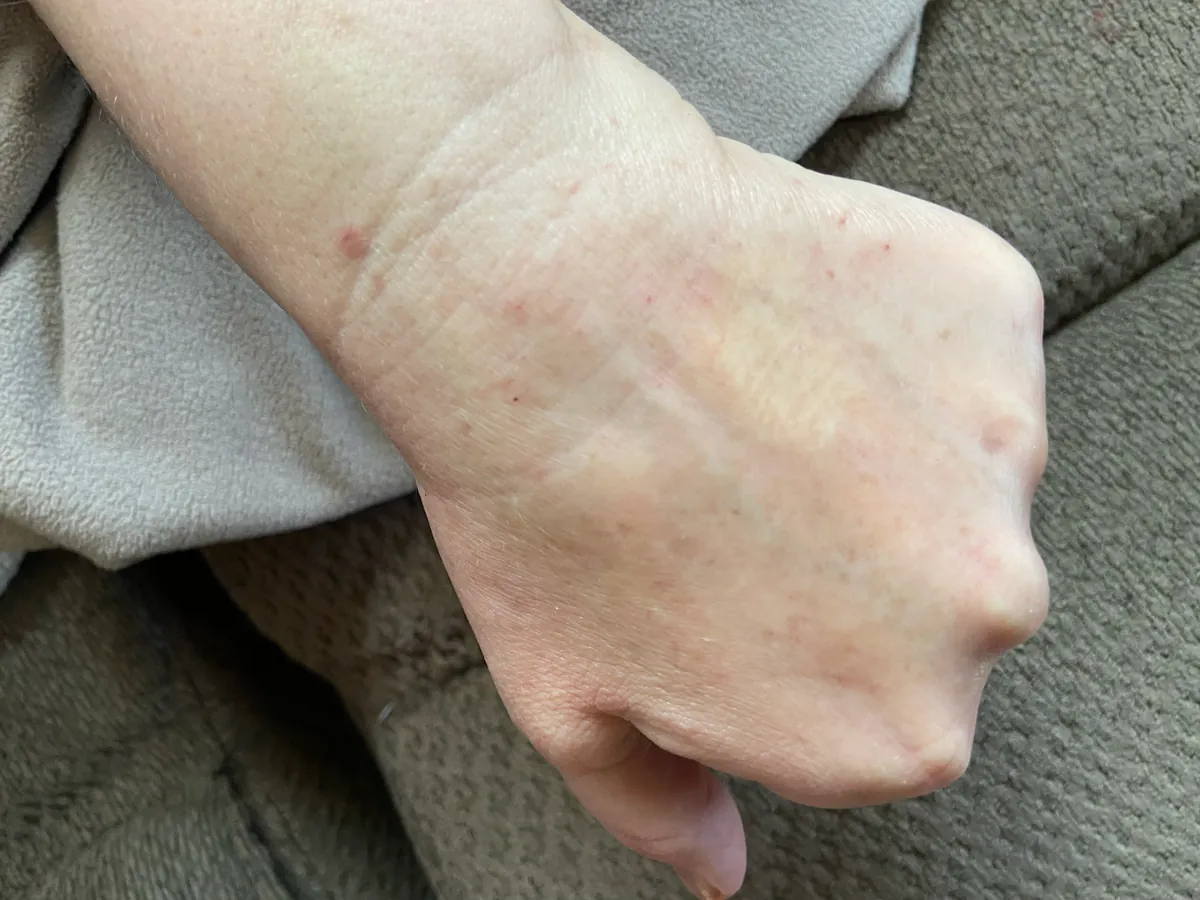
Eczema patient before and after use of ozone oil
What People Are Saying
These are from publicly available reviews online:
"I have tried many other creams ointments and pills to help an inflamed area of my body…skin- topical, possibly histamine related. Thanks to Simply O's Sunflower oil that layer of inflammation has subsided." - Kimberly O.
"Helped with psoriasis keeping it under control. No crazy medications or things in it that cause adverse reactions like so many psoriasis specific meds." - Jason R.
"My skin is well hydrated and finally happy! I am prone to redness, itching and reactions -all of which have completely resolved since using." - Janet E.
"My daughter is prone to dry skin and has broken out in patchy eczema. Keeps her skin intact and hydrated. Haven't had an episode since." - Vanessa G.
"I had nail fungus under 7 of my toe nails and it was steadily getting worse - nothing would stop it. The ozonated oil cleared up all but 3 toes over a 12 month period. Applied twice a day. It's hard to tell I ever had the fungus." - Warwick P.
"I had a small bump on the skin on the bridge of my nose. After applying the O3 oil it steadily got smaller and disappeared in about 10 days." - Paul I.
The Science Behind Ozone Oil
For all you science nerds, here are studies demonstrating how ozone oil works:
Healing pathway - what it upregulates (mouse wound study, in fibroblasts):
"Assays showed that ozone oil up-regulated collagen I, α-SMA, and TGF-β1 mRNA and protein levels in fibroblasts"
Wound healing with oil control - shows effect of the ozonated oil vs. standard oil (guinea pig study):
"Based on the results from the wound closure between the ozone group and the oil group on days 0, 3, 5, 7, and 11, the ozone group showed a significantly smaller wound size and residual wound area than the oil group"
Antimicrobial efficacy - demonstrates antimicrobial effect (Ugazio et al., 2020, in the references):
"Ozonated oils have demonstrated activity and can be proposed for use in the prevention and treatment of chronic local infections, in appropriate formulations and in controlled cases, as an alternative to topical antimicrobial agents."
A clinical trial comparing OLEOZON (ozonated sunflower oil) to conventional treatment for dental wounds found that 92% of patients healed with ozonated oil compared to 78% with the standard treatment. Patients using ozonated oil also required fewer follow-up visits.
For more on the research behind ozone therapy, explore our guide on comparing IV ozone therapy options.
Want to understand the full scope of ozone therapy? Get our free comprehensive guide.
How to Use Ozone Oil
Getting results from ozonated olive oil requires understanding proper application methods.
For Skin Conditions and Wounds
- Clean the affected area if possible
- Apply a thin layer of ozonated oil -a little goes a long way
- Allow it to absorb (no need to cover unless protection is needed)
- Repeat up to 2-3 times daily (if severe issue)
- Continue use until the condition resolves, plus a few extra days
The oil-like texture warms and spreads easily with body heat. For best results, be patient -some conditions like nail fungus require weeks or months of consistent application.
For Daily Skincare
Many people incorporate ozone oil into their nightly routine. Applied before bed, it works while you sleep to:
- Hydrate deeply without clogging pores
- Support collagen production
- Address minor blemishes and irritation
"I have been using for several years now and find more and more benefits. It really helps keep skin clear -body and facial." - Kimberly O.
Storage Tips
- Keep refrigerated for maximum shelf life (6-12 months)
- At room temperature, potency decreases faster
- Close container tightly after use
- Avoid heat and direct sunlight
Ozone Oil for Dental Health
One of the most popular applications of ozone oil is for oral health. Oil pulling -swishing oil in the mouth -takes on new dimensions when using ozonated oil.
The mouth contains miles of microscopic tubules in the teeth. Regular oil pulling with ozonated oil helps:
- Reduce harmful bacterial populations
- Support gum tissue health
- Reach areas that brushing and flossing miss
Dr. Stuart Nunnally, a biological dentist with decades of experience, explains:
"We use ozone in all kinds of infections. Many times we can use ozone without using antibiotics, because we can use it in the area of wounds and in the areas where we anticipate and want to have robust healing."
On oil pulling specifically, Dr. Nunnally notes: "We encourage oil pulling. There's great data, most of it's anecdotal, but we know it doesn't do any harm."
"I was having issues with bleeding gums that wouldn't heal and would get irritated after flossing. After about 10 days of oil pulling twice a day, my gums finally healed!" - Donna K.
How to Oil Pull
- Use 1 tablespoon of ozonated oil
- Swish gently for 10-20 minutes (start with 5 if new to oil pulling)
- Spit into trash (not sink -it can clog pipes)
- Rinse mouth with water
- Follow with normal brushing
For best results, oil pull first thing in the morning before eating or drinking.
For more on ozone applications in oral health, see our guides on ozone oil pulling and ozone in dentistry.
What Applications Are Ozone Oils Used In?
Ozone oil is a multi-purpose product that can be used for a wide range of issues:
Cosmetic purposes - Acne, wrinkles, rosacea, sores, and blemishes
Medical purposes - MRSA, ulcers, non-healing wounds, burns, rashes
Tooth and gum purposes - Receding gums, cavitations, infections, sores, post-surgery healing
Gut health - Some people take ozone oil capsules for gut issues such as parasites and stomach complaints; the evidence here is limited
Vaginal and rectal applications - Ozone oil suppositories can assist with infections without harming the biome. For more on this delivery method, see our guide on rectal ozone therapy.
How ozonated olive oil is made (and can you make it at home?)
Manufacturers make ozonated oil by bubbling oxygen-ozone gas through the oil, usually for many hours to several days, until the oil is saturated. The ozone reacts with the double bonds in the oil’s unsaturated fatty acids and forms ozonides and peroxides. As this happens the oil turns paler and thickens into a gel. (Travagli 2010)
Makers measure how far the reaction has gone with the peroxide value. Two oils that look the same can have very different peroxide values, which is why lab-tested oil is easier to dose and compare.
We do not recommend making ozonated oil at home. Bubbling oxygen-ozone gas through oil for hours or days can push the oil past its flash point and start a fire or even an explosion. Home-made oil also cannot be checked for strength: without a lab test you will not know its peroxide value. The Madrid Declaration on Ozone Therapy advises against making ozonated oil with a medical ozone generator. Buy lab-tested oil from a manufacturer that publishes its peroxide value. See the reference sheet for how manufacturers make it.
Can you take ozonated olive oil internally?
Some people take ozonated oil by mouth, usually in capsules, for gut issues. The research on internal use is much thinner than for skin use, and most of what exists is small studies and clinical experience. We cover the forms, typical use and cautions on our page about ozone oil pills and capsules. Check with your practitioner first, especially if you are pregnant or take medication.
Ozone oil for skin
Skin is the most common use. People apply a thin layer to acne, eczema patches, minor wounds, fungal infections and dry or irritated areas, usually once or twice a day, often at bedtime. Patch test on a small area first. For a condition-by-condition look at the research, see ozone therapy for skin and dermatology.
How to Choose Quality Ozone Oil
Not all ozonated oils are created equal. Understanding quality markers helps you choose effectively.
What "Fully Ozonated" Means
The ozonation process continues until the oil reaches a saturation point. Key indicators of quality:
- Peroxide value (PV) - Measures the oil's peroxide content, the main indicator of how strongly it has been ozonated.
- Consistency - Fully ozonated olive oil has a thick, gel-like texture, not liquid
- Color - Changes from golden to lighter, more opaque appearance
- Smell - Properly ozonated oil has a distinctive ozone odor
What to Look For
- Base oil quality - Organic, extra virgin olive oil produces the best results
- Lab testing - The maker publishes the oil’s peroxide value
- Concentration options - Some products offer different potency levels for different uses
- Storage guidance - Quality products include proper storage instructions
"I love that there are multiple options for strength so I can choose which one based on what I'm using it for." - Kayte S.
We do not recommend making your own ozonated oil. Buy lab-tested oil that lists its peroxide value (see the section on making it above).
Side Effects and Safety
One of the remarkable aspects of ozonated olive oil is its safety profile. Ozonated oils have a long record of topical use and are generally well tolerated. A review of ozonated oils in skin diseases covers how they are made and what to look for. Contact dermatitis is the main safety caveat (see below).
Known Considerations
- Smell - Fully ozonated oil has a distinctive ozone odor that some find strong
- Texture - The oil-like consistency differs from regular oils, often slightly thicker
- Skin sensitivity - Those with very sensitive skin should patch test first
Who Should Consult a Doctor First
While generally safe, speak with a healthcare provider before using ozonated oil if you:
- Are pregnant or nursing
- Have a known allergy to olive oil
- Have open wounds near the eyes
- Are treating a serious medical condition
Side effects are uncommon, but they do happen. Contact dermatitis (redness, itching, a rash where the oil was applied) has been reported with ozonated olive oil ointments, so patch test first and stop if your skin reacts. (Aerts 2016)
Full protocol
Topical Ozonated Oil and Cream for Skin Protocol
Peroxide-value strengths, how often to apply, storage and precautions for ozonated oil and cream on the skin.
See the full protocol →Frequently Asked Questions
How long does ozonated olive oil last?
When refrigerated, quality ozonated olive oil maintains potency for 6-12 months. At room temperature, it degrades faster. Always check manufacturer guidelines and store in a cool, dark place with the container tightly closed.
Can I make my own ozonated olive oil?
We do not recommend it. Bubbling ozone through oil for hours or days can push the oil past its flash point and start a fire or even an explosion, and home-made oil cannot be checked for strength without a lab test. The Madrid Declaration advises against making ozonated oil with a medical ozone generator. Buy lab-tested oil from a manufacturer that publishes its peroxide value.
What is ozonated olive oil (ozone oil)?
Ozonated olive oil, also called ozone oil, is olive oil that has been reacted with ozone gas until it turns into a thick gel. The reaction forms ozonides and peroxides. It looks and smells different from regular olive oil and is used mostly on the skin, gums and mucous membranes.
What is ozonated olive oil used for?
People use it on the skin, gums and mucous membranes, for example on minor wounds, dry or irritated skin, and in oil pulling. Most of the research is small lab and clinical studies, with wound and dental uses studied most, so reported results are examples and carry no guarantee.
How does ozonated olive oil work?
In lab studies, the ozonides and peroxides in the oil show antimicrobial activity, and some studies link them to higher growth factor and collagen activity in healing tissue. These findings come mostly from test-tube and small clinical studies, and results in people vary.
Is ozonated olive oil safe, including for sensitive skin?
Ozonated oils have a long record of topical use and are generally well tolerated in studies. Contact dermatitis (redness, itching, a rash) has been reported, so patch test on a small area first and stop if your skin reacts. Speak with a healthcare provider first if you are pregnant or nursing or have an olive oil allergy.
How quickly will I see results?
It depends on the use. People report small skin changes within days, and uses that need a longer course can take weeks to months of regular application. These are typical reports and carry no guarantee. If a problem is getting worse, see a doctor.
How do I choose a quality ozonated olive oil?
Look for oil made from quality olive oil, ozonated with medical-grade oxygen, properly stabilized, and sold by a maker that publishes the peroxide value from lab testing. Fully ozonated oil is a thick gel with a distinct ozone smell, and the label should include storage instructions.
The Bottom Line
Ozone oil represents one of the most accessible and versatile applications of ozone therapy. By combining antimicrobial power with tissue regeneration in a stable, easy-to-use form, it addresses issues that conventional treatments often struggle with.
The lab and clinical research lines up with what users describe: the mechanisms are documented, side effects are uncommon, and the trials on wounds and skin have been encouraging. Patch test, be patient, and give it a fair trial.
Whether you're dealing with a stubborn skin condition, looking to improve your dental health routine, or simply want to add a powerful tool to your natural health approach, ozonated olive oil deserves serious consideration.
Ready to learn more?
Download our free Definitive Guide to Getting Started with Ozone Therapy for comprehensive protocols and practical guidance.
Types of Ozonated Products
Beyond topical ozone oil, several related products serve specific purposes:
- ozone oil capsules - For internal use and gut health
- ozone oil suppositories - For rectal or vaginal applications
- oil pulling with ozonated oil - For oral and dental health
- ozone oil for joint pain - Targeted pain relief
- ozonated glycerin - Water-soluble alternative
- ozone water - For drinking and wound care
References
- Martinez-Abreu J, et al. "Efficacy of OLEOZON compared to Alvogil in the treatment of alveolitis." Journal of Ozone Therapy. 2015. DOI: 10.7203/jo3t.1.1.2015.12162
- Travagli V, et al. "Ozone and ozonated oils in skin diseases: a review." Mediators of Inflammation. 2010. PubMed
- Bocci V. "Ozone: A New Medical Drug." Springer. 2005.
- Ugazio E, et al. "Ozonated oils as antimicrobial systems in topical applications." Ozone: Science & Engineering. 2020.
Methods, equipment and safety basics in one place. We send it to your inbox.
Check your inbox: your free guide is on its way.
Something went wrong. Please try again.