
Rectal Ozone Therapy (Ozone Enema / Rectal Insufflation)
Rectal ozone therapy (rectal insufflation, sometimes called an ozone enema) is a home or clinic method that puts a measured dose of oxygen-ozone gas into the colon through a soft catheter. It is one of the systemic forms of ozone therapy, meaning its effects reach the whole body, not just the gut.
Nobody has more of a right to your health than you. Doctors make recommendations, medical advertisers offer suggestions, but at the end of the day you’re the one who makes the call.
For equipment recommendations and setup guides, see our complete guide to ozone therapy machines for home use.
So what happens when you lose control of your health? When disease sets in, when chronic illness knocks you down time and again, when the aging process starts to speed up, are you still the one in charge?
Sickness, aging and disease are all inevitable parts of the world we live in. But they don’t have to be the end of your story. You always have a say in how you respond to illness, how fast you age.
Too many people go the route of popping pills to treat uncomfortable symptoms…
“My head hurts, I better take another Aspirin.”
… but never address the ROOT of the problem: a body that doesn’t function like it should.
This post will cover:
- What rectal ozone insufflation therapy is
- How it’s backed by science and how it works
- What doctors and patients are saying about it
- How it can address the root of your health issues
- How you can do it at home
What is Rectal ozone therapy?
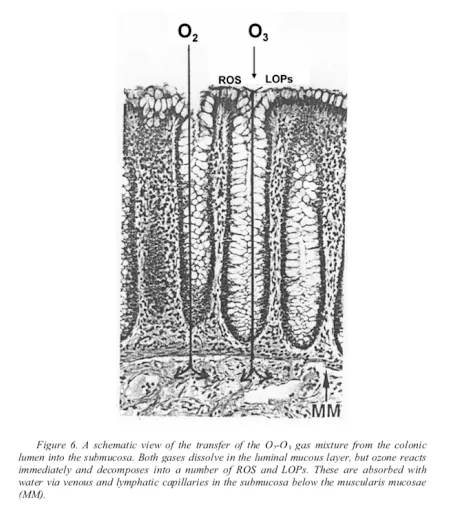
Rectal insufflation is the administration of medical grade ozone directly into the colon via the rectum. When ozone reacts with the water and proteins of your gut, the compounds it forms are absorbed through the gut wall into your bloodstream, where they act as signals that support your antioxidant defenses, circulation and immune response.
In case you haven’t heard, the main danger with ozone is breathing it. That’s why we devoted an entire page to the safety of ozone therapy. While it’s never safe to directly inhale ozone gas, there are a number of different ways to administer ozone that actually benefit your body.
These range from topical and local ozone — administrations that benefit a specific part of your body — to systemic ozone treatments, which provide benefits to your entire body. Of the three types of systemic ozone therapy treatments, rectal insufflation is the most common, the easiest and most cost-effective.
Why is rectal ozone therapy considered a systemic treatment?
Interestingly, in an animal study of rectal insufflation, oxygen levels (PaO2) in the venous blood of rabbits rose to 230% of normal, and the researchers reported even higher values when ozone was added to the oxygen. (1) So how could ozone into the rectum do this?
According to Dr. Velio Bocci — the father of ozone therapy who laid much of the scientific groundwork — ozone goes into the gastrointestinal tract and quickly transforms into other properties. Ozone does not react with the gut wall; instead it reacts with water and proteins, which creates a domino effect of beneficial reactions. From there, the oxygen and ozone reactants are absorbed into the gut wall and into the bloodstream. All this happens almost immediately! (2)
Wondering how it stacks up against IV ozone? See our full comparison of IV ozone vs rectal ozone therapy, covering effectiveness, cost, and how often each can be done.
How does ozone therapy help with disease and aging?
In simple terms, the oxygen we need to survive is made of two oxygen atoms (O2) and ozone is made of three oxygen atoms (O3). So when medical ozone interacts with different fluids in your body (in this case, the fluids in your gut that transfer to your bloodstream), that third oxygen atom hitches a ride on other molecules (oxygenation).
Your mitochondria (the little guys that power your cells) thrive on oxygen. The better your mitochondria can access and convert oxygen into energy for your cells, the healthier you’ll be overall.
Most people don’t know how important oxygen is to the health of your entire body. Hold your breath too long and you’ll die — we all (hopefully) have that little nugget of common sense. But not everybody understands the extent of oxygen’s importance for your cells.
A line often attributed to Otto Warburg, the Nobel Prize winning physiologist, says: “Deprive a cell of 35% of its oxygen for 48 hours and it may become cancerous.” We could not find it in his published writings, so treat it as a paraphrase. Warburg’s own research did show how much cells depend on oxygen for healthy energy production.
While good oxygenation of our body allows our cells to produce energy, a lack of oxygen nurtures an environment for chronic diseases. Many cancer cells, for example, rely heavily on glycolysis, a way of making energy that doesn’t use oxygen, even when oxygen is available (the “Warburg effect”). (3, 4, 5)
Rectal Insufflation Ozone Therapy Oxygenates The Body
The scientific community claims ozone therapy is versatile and causes a “cascade” effect of positive reactions. They also claim it increases oxygen efficiency while helping your body produce more energy. (6, 7, 8, 9, 10)
Oxygen efficiency is different from breathing oxygen. Breathing gets oxygen into your body, but oxygen efficiency describes how well you use it.
You can breathe all the oxygen you want (not a bad idea), but what’s more important for your overall health is how well your body puts that oxygen to use (oxygen efficiency). Ozone therapy may help people increase their oxygen efficiency.
Rectal Insufflation Ozone Therapy Regulates Oxidative Stress
Ozone therapy helps to reduce the amount of oxidative stress in the body, a leading cause of aging and disease.
According to the National Library of Medicine, oxidative stress is an “imbalance of free radicals and antioxidants in the body, which can lead to cell and tissue damage.” Oxidative stress occurs naturally and plays a role in the aging process. (11) Poor health choices and environmental factors can accelerate oxidative stress. This can lead to chronic inflammation, which Harvard Health describes as a common thread in many chronic diseases. (12)
If oxidative stress is a key factor to chronic disease, inflammation, and aging, is there a way to reduce it?
You betcha.
According to lead researchers in this field, ozone therapy is able to not only mediate or reduce oxidative stress, but also increase oxygen efficiency, improve blood circulation, detoxify the body on a cellular level, and more. (13, 14, 15, 16, 17, 18, 19, 20)
Rectal Ozone Insufflation Therapy helps the immune system balance itself
A healthy immune system is the best defense you have. But if your immune system is overactive, as is the case with autoimmune diseases, ozone may lower your system to safer levels. On the other hand, if your immune system is underperforming, like it often does with infectious diseases, ozone may give your immune system a boost. (21, 22, 23, 24, 25)
Dr. Robert Rowen demonstrated an impressive case study on a severe autoimmune disease called dermatomyositis. The patient had been receiving high doses of immune suppressing drugs from conventional doctors, which only resulted in adverse side effects. But after the infected teeth were removed and the patient received regular IV ozone (not rectal insufflation), Dr. Rowen reported that the symptoms reversed and bring the patient’s immune system into balance (check out the pictures below). (26)
In addition to this case study, Dr. Rowen posted 23 video logs documenting success with ozone therapy for autoimmune issues. (27)
(An autoimmune disease, before and after ozone therapy by Dr. Rowen)


Using rectal ozone therapy for various types of infections
Practitioners and patients also use rectal insufflation for viral, bacterial, and fungal infections.
Ozone doesn’t add chemicals to your system or force your body to do anything unnatural. It simply stimulates the immune system to eliminate infections — your body is the one doing the work.
This is one of the reasons integrative practitioners use it for:
- Mold toxicity
- Lyme Disease
- Viral infections
If you do get started with ozone therapy and have an infection present, be aware of Herxheimer reactions. Stimulating the immune system to balance is great. But if you kick your immune system into gear with a high infectious load, it will begin to kill off the pathogens faster than the body can discard them. This leaves a lot of endotoxins in the body, which can make you feel sick for a few days to a couple weeks.
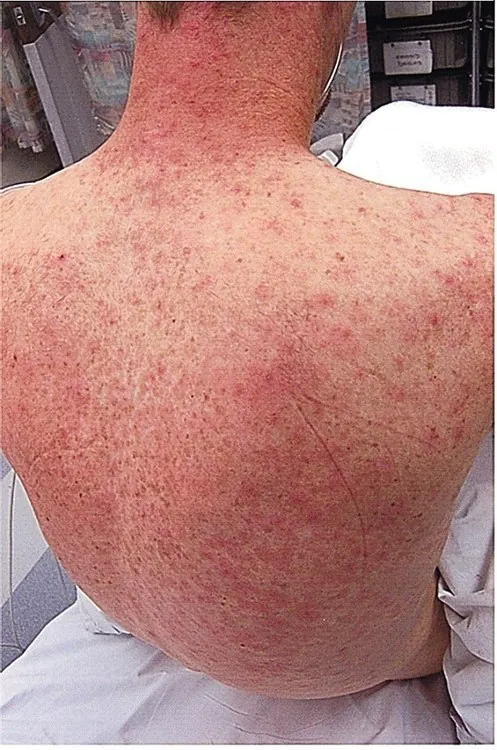
Example of a Herxheimer reaction when you activate the immune system and start to kill off pathogens too quickly.
To avoid the Herxheimer reaction, people start slowly. Use the same starting point given in How is rectal ozone therapy done? below: 200 mL at the low end of the range, twice a week for the first two weeks, or half that if you know you’re sensitive. Build up only as you tolerate it. The full protocol includes a slower plan for sensitive people. Some practitioners use vitamin C infusions to ease such reactions after the ozone application.
Rectal ozone therapy and the microbiome
A lot of people ask how an oxygen-based therapy affects the microbiome. (We cover the research in more depth in how rectal ozone insufflation affects the gut flora.)
It’s a valid question also asked by people researching ozone therapy. Let me point you to a few of the experts I trust the most to answer this question:
- Dr. Mandy Dell — Dr. Dell is rigid about labs and data. She runs labs on the microbiome and is a huge fan of ozone because of its ability to help resolve biome issues
- Dr. Rowen — Also an ozone expert, he has been doing it for 30 years and states he has never seen it harm the biome
- Most notably, Dr. Velio Bocci, the researcher every ozone therapy expert is indebted to.
Dr. Bocci writes:
"Modification of the bacterial flora equilibrium. Owing to the multiplicity of bacterial species, this remains a complex area….. The bacteria and their products interact with each other and with the enterocytes (intestinal absorptive cells), goblet and enteroendocrine cells (producing a myriad of hormones) and the gut-associated lymphoid tissue, GALT (Hooper and Gordon, 2001).
On the other hand, it is well known that contaminated food, water and antibiotics can subvert this dynamic symbiosis by allowing the establishment of pathological bacteria and fungi like Candida albicans, C. tropicalis, Torulopsis glabrata, etc. The successive dysmicrobism (upset microbiome) usually has far-reaching deleterious consequences, ranging from transient to chronic enterocolitis and to autoimmune reactions and therefore we must try to correct it in order to restore normal homeostasis. Whether Rectal Insufflation with a daily input of oxygen-ozone can re-equilibrate the bacterial flora and lead to normal immunoreactivity remains to be demonstrated (and explained), although results suggest a beneficial effect."
What does this mean? Bocci saw a beneficial effect in practice but said the proof was still to come. The clinical results so far point the same way.
Here is a study to verify ozone’s effect on the microbiome. The researchers conducting the study were able to remediate gut dysbiosis with rectal insufflation and ozone water. They write,
“In conclusion, the study confirmed the validity of the treatment with ozonized water combined with rectal insufflation of oxygen and ozone mixture, to control the symptoms linked to dysbiosis and to favor the restoration of proper environmental homeostasis at an intestinal microclimate level in adults”
Between all the studies and the anecdotes we've had over the years, I see it as a positive to the microbiome. Here’s my reasoning:
- It's a small amount of gas that doesn't reach the entirety of the colon. The ozone is known to be absorbed into the mucosal wall and blood stream. The rest of the oxygen is dispelled or used in the lower part of the colon.
- The oxygen-ozone therapy is a known homeostatic stimulator - it creates a balancing effect.
- It may have an effect on the immediate area that is exposed, killing good and bad bacteria. However, the quantity of gas is low and it is not a sustained effect. The body appears to respond by repopulating with beneficial bacteria.
Ozone enema vs rectal insufflation: are they the same?
People use “ozone enema” to mean a few different things, so it helps to separate them:
- Rectal insufflation (gas). A small volume of oxygen-ozone gas, usually 200 mL or more, is released into the rectum through a soft catheter. This is what most people mean by an ozone enema, and it’s the method this page covers.
- Ozonated water enema. Water is bubbled with ozone and used as an enema or in colon hydrotherapy. Ozone breaks down quickly in water, so it has to be used right after it’s made. See ozone water.
- Ozonated oil suppositories. Ozonated oil is frozen into small suppositories and inserted, usually at bedtime. The oil releases its active compounds slowly. See ozone oil suppositories.
All three put ozone in contact with the lower gut, but the dose, the speed and the equipment are different. Gas insufflation is the one studied as a systemic therapy.
5 things to remember about rectal ozone therapy
Unless you’re a doctor yourself, a lot of this stuff can be confusing. So let's recap what we’ve covered so far…
- You’re in charge of your health, no matter how good or bad it is.
- Conventional medicine is good at relieving symptoms, and for many long-term problems it also helps to address the ROOT of your health.
- Done correctly, rectal ozone insufflation is well tolerated and helps your body use oxygen better on a cellular level.
- Rectal insufflation can help your body manage oxidative stress, which is a leading cause of aging.
- Rectal ozone insufflation can help your immune system balance itself (many people use it alongside their doctor’s care).
One thing we didn’t cover yet is how easy and accessible rectal ozone insufflation therapy is. While most ozone practitioners do offer rectal insufflation in their clinics, many people administer it themselves from the comfort of their own homes. For a side-by-side on cost and convenience, see IV ozone vs rectal ozone.
How is rectal ozone therapy done?
Rectal insufflation is one of the simplest home methods. You need an oxygen tank and regulator, a medical ozone generator, an ozone bag (or syringe) and a soft catheter.
Rectal ozone kit: what you need
- A medical ozone generator that runs on pure oxygen and lets you set the concentration in µg/mL.
- Medical oxygen and a regulator that can deliver a low, steady flow.
- An ozone-resistant bag or syringe to collect the gas, and ozone-resistant tubing.
- Soft rectal catheters (single use, or cleaned between uses).
Many sellers bundle these as a “rectal ozone kit.” For what to look for in the generator itself, see our guide to ozone therapy machines for home use. The exact setup steps are in the rectal ozone protocol.
- Fill the bag with oxygen-ozone gas from the generator at the planned concentration, then turn the oxygen off and clamp the bag.
- Attach the catheter and insert it about 3 inches into the rectum.
- Roll the bag up slowly to release the gas, then remove the catheter. There's no need to hold the gas longer than 20 to 30 seconds.
Typical starting point: 200 mL at the low end of the 10 to 35 µg/mL range, twice a week for the first two weeks, then up to 5 times a week. If you know you're sensitive, start at half that.
How often: several sessions a week. For most people it takes up to 4 weeks of regular sessions to notice a change, so consistency matters.
Safety essentials: mild cramping or bloating means the dose is too high, so lower it. Avoid IV and rectal ozone on the same day. Don't use it if you're pregnant. If you have a bleeding or clotting disorder or serious heart instability, get your practitioner's clearance first. G6PD deficiency is a consideration: start low and tell your practitioner.
Full protocol
Rectal Ozone Insufflation Protocol
The exact dosing schedule, step-by-step setup, helpful hints, precautions and a slower plan for sensitive people.
See the full protocol →Final thoughts
Rectal insufflation ozone therapy is one of the less glamorous therapies out there, but it’s also one of the most practical ways to get systemic ozone, and many people find it works well for them. Whether you’re dealing with an autoimmune disorder, infectious disease, or simply want to live a consistently healthy life, it’s worth checking out and trying for yourself.
While we do know an awful lot about ozone therapy and integrative medicine, we’re not qualified to offer medical advice. So talk to your doctor today about whether or not ozone therapy could be right for you.
Want a clinic to do it? Many clinics offer rectal ozone in the office. Find an ozone doctor near you and filter by rectal insufflation, or see what ozone therapy costs at a clinic and at home.
To help you and your doctor gather more information, we’ve created a comprehensive guide to ozone therapy. Because we believe everyone should have access to this incredible therapy.
Frequently asked questions
What is rectal ozone therapy?
Rectal ozone therapy, also called rectal ozone insufflation, is the administration of a medical-grade oxygen–ozone gas mixture into the rectum, where ozone reacts with fluids and proteins and is absorbed systemically.
Why is rectal ozone therapy considered systemic?
Ozone reacts in the gastrointestinal tract to form signaling molecules that are absorbed through the gut wall into the bloodstream, improving oxygen efficiency, immune modulation, circulation, and detoxification throughout the body.
How does rectal ozone work?
According to Dr. Velio Bocci, ozone goes into the gut and quickly transforms into other compounds. Ozone does not react with the gut wall; instead it reacts with water and proteins, which creates a domino effect of beneficial reactions. From there, the oxygen and ozone reactants are absorbed into the gut wall and into the bloodstream.
What equipment is required for rectal ozone therapy at home?
Required equipment includes a medical-grade ozone generator, oxygen tank, oxygen regulator, ozone-resistant bag, catheter, and ozone-resistant tubing.
How to do rectal ozone therapy?
For this you’ll need an ozone generator, along with ozone bags and catheters. Otherwise you can simply purchase an ozone generator kit with all you need. The step-by-step setup is in the rectal ozone protocol.
What ozone concentrations are used for rectal insufflation?
Our clinic protocol uses 10–40 µg/mL (40 is the maximum) and 200–400 mL, starting with 200 mL twice a week for the first two weeks, then up to 5 times a week as tolerated.
What does rectal ozone do?
The scientific community claims ozone therapy is versatile and causes a “cascade” effect of positive reactions. They also claim it increases oxygen efficiency while helping your body produce more energy.
What conditions is rectal ozone therapy used for?
Rectal ozone therapy is commonly used for infections, autoimmune conditions, mold toxicity, Lyme disease, gut dysbiosis, inflammation, oxidative stress, and general immune support.
Is rectal ozone therapy safe?
When performed correctly with proper equipment and dosing, rectal ozone therapy is generally considered safe. Ozone should never be inhaled, and contraindications must be observed.
What are the side effects of rectal ozone?
The most common are mild cramping, bloating or gas, which usually mean the dose is too high and should be lowered. If you have an infection, a temporary Herxheimer (“die-off”) reaction such as fatigue, rash or chills can show up in the first weeks. Starting low and building slowly helps with both.
How much does rectal ozone therapy cost?
In a clinic, about $30 to $100 per session. At home, a complete setup costs about $1,200 to $2,200 one time, after which each session costs cents plus oxygen refills. See IV vs rectal ozone for the full cost comparison.
Methods, equipment and safety basics in one place. We send it to your inbox.
Check your inbox: your free guide is on its way.
Something went wrong. Please try again.