 contact@mediskill.com
Ozone Therapy for Hair Loss

Hair loss is more common than most people realize. It can be totally demoralizing and frustrating.
If you've tried the usual recommendations and haven't seen the results you were hoping for, it's natural to start looking at other options. Ozone therapy is one approach that some clinicians and researchers have explored for its potential effects on the hair growth cycle. It’s not exactly a magical hair treatment, but it addresses dysfunctions and processes in your body that can contribute to hair loss. While there is a study and some promising clinical anecdotes, the evidence remains limited.
Let's look at the available evidence, what it shows, and where the gaps remain.
What Causes Hair Loss?
Hair loss is rarely just cosmetic. It signals something happening beneath the surface, whether that's hormonal shifts, immune dysfunction, or poor blood flow to the scalp.
Understanding the root cause matters because it determines which treatments can actually help. Below are the most common biological drivers of hair loss, and the specific mechanisms that ozone therapy may later be shown to address.
Androgenetic Alopecia (Pattern Hair Loss)
Androgenetic alopecia is the most common form of hair loss. It affects up to 50% of both men and women by age 50.
The primary driver is dihydrotestosterone (DHT), a potent hormone derived from testosterone. DHT binds to receptors on hair follicles and gradually shrinks them. Over time, this shortens the active growth phase and produces thinner, weaker strands.
To understand how this works, it helps to know the three phases of the hair growth cycle:
- Anagen (growth phase): The active phase where hair grows. Normally lasts 2 to 7 years.
- Catagen (transition phase): A short phase lasting about 2-3 weeks where the follicle begins to shrink.
- Telogen (resting/shedding phase): The follicle rests for roughly 3 months, then the hair falls out and the cycle restarts.
In androgenetic alopecia (AGA), the anagen phase gets progressively shorter with each cycle. Eventually, follicles can only produce fine, nearly invisible vellus hairs, sometimes called "peach fuzz." [1,2,3]
Key takeaway: DHT doesn't kill hair follicles outright. It miniaturizes them over many cycles, which is why early intervention matters.
Reduced scalp microcirculation also plays a contributing role. As follicles miniaturize, the tiny blood vessels feeding them shrink too. This means less oxygen and fewer nutrients reach the follicle, which accelerates thinning. [4]
This is an important detail for anyone exploring ozone therapy for hair loss. Treatments that improve local blood flow and oxygen delivery target one of the core mechanisms behind pattern hair loss.
Autoimmune Alopecia (Alopecia Areata)
Alopecia areata (AA) is a different beast entirely. Rather than hormones slowly shrinking follicles, the immune system directly attacks them.
Specifically, T-cells (a type of white blood cell) swarm the hair follicle bulb and trigger inflammation. This disrupts the normal growth cycle and causes hair to fall out in patches. In severe cases, it can progress to total scalp hair loss (alopecia totalis) or total body hair loss (alopecia universalis). [5]
Two biological factors are central to this condition:
- Chronic inflammation: Persistent immune activation around the follicle prevents it from entering or sustaining the growth phase. [6]
- Oxidative stress: An imbalance between damaging free radicals and the body's protective antioxidants at the follicle level. This oxidative burden compounds the inflammatory damage. [7]
Key takeaway: Alopecia areata is driven by immune dysfunction and oxidative stress at the follicle, not by DHT. This distinction matters because treatments that modulate immune response and reduce oxidative damage address a completely different pathway than anti-DHT drugs.
Other Common Causes
Hair loss isn't always about hormones or autoimmunity. Several other factors can push follicles out of their growth phase or damage them directly:
- Stress (telogen effluvium): Acute physical or emotional stress can push a large number of follicles into the resting phase all at once. This leads to noticeable shedding 2 to 3 months after the stressful event. [8]
- Aging: Follicle regeneration naturally slows with age. Scalp blood flow also declines over time, reducing the oxygen and nutrient supply that follicles need. [9]
- Scalp infections and skin conditions: Fungal infections, seborrheic dermatitis, and psoriasis can inflame or scar the scalp, damaging follicles directly. [10,11]
- Hormonal changes: Pregnancy, childbirth, menopause, and thyroid disorders all alter hormone levels in ways that disrupt the hair cycle. [12]
- COVID-19 and Long COVID: Post-viral telogen effluvium is increasingly reported after COVID-19 infection. The systemic inflammation and physiological stress of the illness can trigger widespread shedding weeks to months later. [13]
- Chronic infections and systemic inflammation: Persistent low-grade inflammation from any source can impair follicle health over time, even without a specific scalp condition. [14]
Key takeaway: Many forms of hair loss share common underlying threads: poor blood flow, chronic inflammation, and oxidative stress. These are the same biological pathways that ozone therapy has been studied for, which is why researchers have explored its potential for hair regrowth.
If you want to understand the specific mechanisms by which ozone therapy addresses these pathways, download our free guide for a deeper look at the science.
How Does Ozone Therapy Help with Hair Loss?
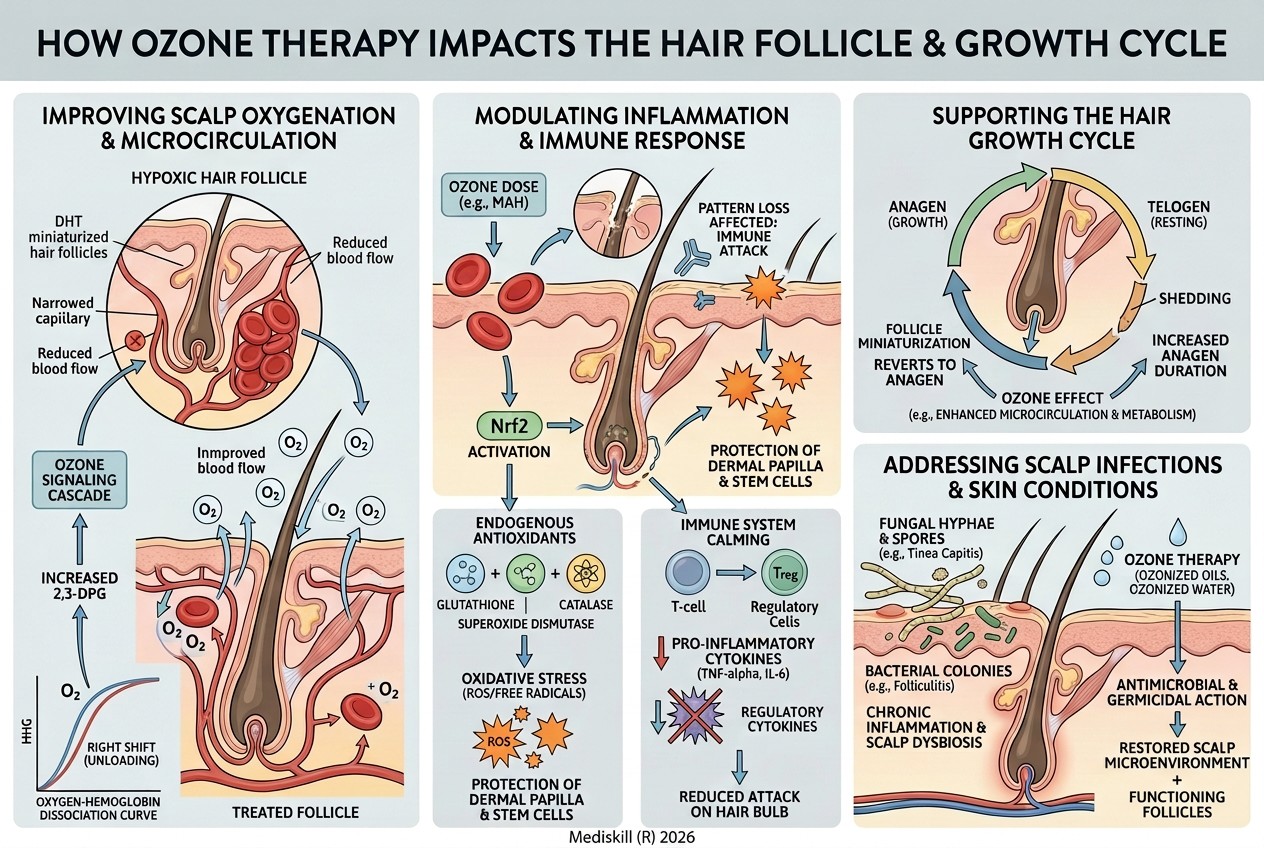
Hair loss is rarely about one single broken pathway. Miniaturizing follicles typically face a combination of poor blood supply, chronic inflammation, disrupted growth cycling, and sometimes infection. Ozone therapy is relevant precisely because it targets several of these problems at once.
Below is a breakdown of the key mechanisms that connect ozone's biological effects to what is actually happening inside a thinning scalp.
Improving Scalp Oxygenation and Microcirculation
Hair follicles are among the most metabolically active structures in the body. When the tiny blood vessels feeding them narrow or deliver less oxygen, follicles shrink and spend less time in the growth phase.
Ozone therapy, particularly through major autohemotherapy (MAH), works by briefly exposing drawn blood to a precise oxygen-ozone mixture. That controlled oxidative contact generates signaling molecules called lipid oxidation products (such as 4-hydroxynonenal). These messengers trigger a cascade that makes red blood cells more flexible and improves how readily they release oxygen into tissues. [15] [PRELIMINARY]
One of the most well-characterized effects is the increase in 2,3-diphosphoglycerate (2,3-DPG) inside red blood cells. Luongo et al. (2017) reviewed how ozone therapy enhances oxygen metabolism in hypoxic (oxygen-deprived) tissues. The key findings relevant to hair loss include [16]:
- 2,3-DPG levels rise, which shifts the oxygen-hemoglobin dissociation curve so hemoglobin releases more oxygen where it is needed most.
- Antioxidant enzymes like superoxide dismutase (SOD) and glutathione peroxidase (GPx) are upregulated, protecting tissues from oxidative damage.
- Overall tissue oxygenation improves, even in areas with compromised blood flow. [17]
Bottom line: Better red blood cell flexibility + more oxygen release = more fuel reaching miniaturized follicles. This improved microcirculation may help support a longer anagen (growth) phase. [MODERATE, mechanism well-established in oncology and vascular contexts, though direct scalp microcirculation data is still limited]
For a deeper look at how ozone autohemotherapy works at the systemic level, you can download our free protocol guide.
Modulating Inflammation and Immune Response
Chronic, low-grade inflammation around the follicle is a common thread in multiple types of hair loss. In androgenetic alopecia, inflammatory infiltrates cluster around miniaturizing follicles. In alopecia areata, the immune system directly attacks the hair bulb.
Ozone therapy at controlled therapeutic doses activates a transcription factor called Nrf2. Think of Nrf2 as a master switch for the body's own antioxidant defenses. When Nrf2 is activated, cells ramp up production of [18]:
- Glutathione (the body's primary intracellular antioxidant)
- Superoxide dismutase (SOD) (neutralizes damaging superoxide radicals)
- Catalase (breaks down hydrogen peroxide)
Luongo et al. (2017) confirmed that ozone therapy upregulates these antioxidant enzymes, reducing oxidative stress in treated tissues. [19] For the scalp, less oxidative stress means less collateral damage to follicle stem cells and the dermal papilla cells that drive hair growth. [PRELIMINARY]
In autoimmune hair loss like alopecia areata, ozone's immunomodulatory effects are also relevant. Ozone therapy shifts cytokine profiles by:
- Reducing pro-inflammatory signals (such as TNF-alpha and IL-6)
- Supporting regulatory immune function that helps calm the overactive attack on follicles
The ISCO3 Madrid Declaration and WFOT standards describe specific immunomodulatory dosing ranges for autoimmune conditions, where lower ozone concentrations tend to modulate rather than stimulate the immune system. [20]
Bottom line: Ozone therapy helps the body turn up its own antioxidant and anti-inflammatory defenses, which may protect follicles from the chronic inflammation that accelerates hair thinning. [PRELIMINARY]
Supporting the Hair Growth Cycle
In pattern hair loss, follicles spend progressively less time in anagen and more time in telogen. The result is thinner, shorter hairs and visible thinning.
By improving oxygenation and reducing inflammation (the mechanisms described above), ozone therapy may help shift follicles from the resting telogen phase back into the active anagen phase. [PRELIMINARY]
The most direct evidence for this comes from Riva Sanseverino et al. (1995), who specifically studied ozone autohemotherapy's effects on the hair growth cycle in androgenetic alopecia patients.
[LIMITED, single study, small sample size, but it remains the only published trial directly examining ozone autohemotherapy and the human hair cycle]
Bottom line: Riva Sanseverino's study is preliminary but notable. It provides the first direct evidence that ozone autohemotherapy can measurably shift the hair growth cycle in androgenetic alopecia patients. Larger, controlled trials are needed to confirm the effect size.
Addressing Scalp Infections and Skin Conditions
Not all hair loss is hormonal or autoimmune. Scalp infections can drive significant shedding:
- Fungal overgrowth (such as dermatophytes causing tinea capitis) can destroy hair shafts and inflame follicles. [22]
- Bacterial folliculitis creates pustules around follicle openings, damaging the growth environment. [23]
- Seborrheic dermatitis triggers chronic flaking and inflammation that weakens hair anchoring.
Ozone, ozone oil, ozone water, and ozonized glycerin are effective antimicrobial agents against bacteria, fungi, and viruses. For hair loss driven by scalp infections, ozone's germicidal action can help restore a healthy scalp environment where follicles can function normally. [24]
A cleaner, less inflamed scalp microenvironment also reduces the chronic immune activation that contributes to inflammation-driven shedding. [PRELIMINARY, ozone's antimicrobial properties are well-documented in general, though scalp-specific antimicrobial studies are limited]
What to Expect from Ozone Treatment for Hair Loss
Knowing what happens during a session can take the mystery out of ozone therapy for hair loss.
Important: This content is for educational purposes and does not constitute medical advice or treatment recommendations. Ozone therapy for hair loss should only be performed by a trained practitioner.
Step-by-Step: Major Autohemotherapy Protocol for Hair Loss
This section walks through the major autohemotherapy (MAH) protocol, the same route used in the landmark Riva Sanseverino et al. study on androgenetic alopecia. [21]
1. Consultation and assessment
Before any treatment begins, a trained practitioner evaluates the type and severity of hair loss, your full medical history, and whether you are a suitable candidate for MAH. A baseline trichogram (microscopic hair analysis) or scalp photography is typically taken so results can be measured objectively later.
In the Riva Sanseverino et al. study, trichograms were the primary tool used to track changes in the hair cycle across 42 subjects with androgenetic alopecia. [21]
2. Blood draw
A small volume of blood, typically 100 to 200 mL, is drawn from a vein into a specialized ozone-resistant collection bag or syringe. Standard IV bags are not suitable because ozone degrades conventional plastics.
3. Ozone mixing
Medical-grade ozone/oxygen gas is introduced into the collected blood at a specific concentration, typically 20 to 40 µg/mL per ISCO3 guidelines for autohemotherapy. The blood-gas mixture is gently swirled or rocked to ensure even contact between the ozone and blood cells.
This step is where the therapeutic action begins. Ozone reacts with blood components to form reactive oxygen species and lipid oxidation products that go on to trigger downstream biological effects once the blood is returned to the body.
4. Reinfusion
The ozonated blood is reinfused intravenously over approximately 15 to 30 minutes. The process is similar to a standard blood transfusion and is generally well tolerated.
5. Session frequency
Based on the Riva Sanseverino et al. protocol and general ISCO3 recommendations, sessions are typically performed 1 to 2 times per week. [21]
6. Treatment course
A typical course involves 10 to 20 sessions. After the initial course, the practitioner reassesses progress with a repeat trichogram or scalp photography. In the Riva Sanseverino et al. trial, trichograms were compared before and after the treatment course to document shifts in the anagen-to-telogen ratio (growing hairs vs. resting hairs). [21]
7. Maintenance
Some practitioners recommend periodic maintenance sessions after the initial course, for instance once per month, to sustain improvements in the hair cycle.
Quick-Reference Dosing Table
Bottom line: A full initial course of MAH for hair loss typically spans 5 to 20 weeks, depending on whether sessions are scheduled once or twice weekly. Objective measurement through trichograms is essential to evaluate whether the treatment is working.
Ozone injections for Hair Loss
Some hair loss clinics have reported success using topical ozone injections into the scalp to promote hair growth.
One clinic reports using scalp ozone injections to fortify and strengthen hair follicles, improve scalp blood flow, and support better hair growth while also reducing local inflammation and having antimicrobial properties. [25]
Another clinic has chosen to combine ozone with platelet rich plasma (PRP) injections to promote blood vessel growth, which further improves nutrient delivery to sites of injection. This would theoretically enhance any benefits PRP already has on promoting hair growth. [26]
Personal anecdotes from a physician also report potential upsides with scalp injections, reporting that he has “managed to keep a reasonable head of hair for a man my age.” [27]
However, ozone therapy must be used with caution and under the guidance of a trained health professional, as serious adverse events can occur. After receiving a final round of ozone therapy, a 57 year old female presented to the emergency department with abdominal pain that progressed to pneumoperitoneum (free gas in the abdomen) requiring antibiotics and ICU care for five days. [28]
Bottom line: Some clinics and salons use ozone‑based scalp or systemic treatments as an adjunct in hair‑loss protocols and report improvements in scalp health and hair density, but robust clinical trials on hair growth are currently nonexistent.
Safety Precautions
Ozone therapy is generally safe when performed correctly, but improper administration can cause serious harm. Keep the following precautions in mind [29]:
- Ozone therapy should only be administered by a trained practitioner using medical-grade ozone generators.
- Ozone gas should never be inhaled directly, as it is toxic to lung tissue.
- Proper ozone-resistant materials (silicone tubing, glass syringes, or approved collection bags) must be used to prevent degradation and contamination.
- Contraindications specific to MAH include:
- G6PD deficiency (a genetic enzyme disorder that makes red blood cells vulnerable to oxidative damage)
- Active hyperthyroidism
- Severe cardiovascular instability
- Adverse effects from improperly administered ozone therapy can include skin necrosis, as documented in a 2025 case report involving dermatologic ozone application. [30] [LIMITED]
Key safety takeaway: The complications reported in the literature are linked to improper technique or unqualified practitioners, not to correctly administered MAH. Always verify that your provider follows ISCO3/WFOT safety standards.
For a deeper look at MAH protocols, safety guidelines, and how to find a qualified practitioner, download our free guide.
Frequently Asked Questions About Ozone Therapy for Hair Loss
What are the benefits of ozone therapy for hair loss?
Ozone therapy may offer several potential benefits for people experiencing hair loss:
- Improved scalp blood flow and oxygen delivery to hair follicles
- Reduced chronic inflammation around miniaturized follicles
- A shift from the resting (telogen) phase back into the active growth (anagen) phase
In a 1995 study of 42 patients with androgenetic alopecia, ozone autohemotherapy produced measurable changes in the hair growth cycle on trichogram analysis, suggesting a real shift in follicle activity. [21] [LIMITED]
Bottom line: The evidence is early, but ozone therapy targets several root causes of hair loss, including poor circulation, inflammation, and follicle dormancy.
What is ozone therapy, and how does it work for hair?
Ozone therapy involves administering a precise mixture of ozone (O₃) and oxygen (O₂) to the body. For hair loss, the most studied method is major autohemotherapy (MAH).
During MAH, a small amount of your blood is drawn, mixed with ozone gas at a controlled concentration, and then reinfused. The ozone reacts with blood components to produce signaling molecules called ozonides and lipid oxidation products.
These molecules improve oxygen delivery to tissues and activate the body's own antioxidant defenses. [19] Both of these effects support healthier follicle function by ensuring hair follicles receive the oxygen and nutrients they need to stay in the growth phase.
Is ozone therapy good for alopecia areata (autoimmune hair loss)?
Ozone therapy has immunomodulatory properties, meaning it can help rebalance an overactive immune response rather than simply suppressing it. This makes it a theoretically interesting option for autoimmune conditions like alopecia areata.
However, no published clinical trials have specifically tested ozone therapy for alopecia areata. [LIMITED]
Bottom line: The mechanism is plausible, but direct clinical evidence for alopecia areata is not yet available.
What are the risks of ozone therapy for hair loss?
When administered by a trained practitioner following established protocols (such as those outlined by ISCO3 and WFOT), ozone therapy has a strong safety profile for systemic routes like major autohemotherapy.
However, improper application can cause serious complications. A 2025 case report documented skin necrosis from improperly administered dermatologic ozone therapy, requiring treatment with hyperbaric oxygen. [30] [LIMITED]
Key safety considerations include:
- Only receive treatment from practitioners trained in ozone therapy protocols.
- Avoid unregulated topical ozone applications at incorrect concentrations.
- Ensure proper ozone concentrations are used (MAH typically uses 40 to 60 mcg/mL).
- Never inhale ozone directly, as it is toxic to lung tissue.
⚠️ Warning: Improper ozone application, especially topical use at the wrong concentrations, can cause tissue damage. Always verify your practitioner's training and adherence to international safety standards.
How many ozone therapy sessions are needed for hair loss?
Based on general ISCO3 protocols and the clinical study by Riva Sanseverino et al., a typical initial course involves:
- 10 to 20 sessions of major autohemotherapy
- Performed 1 to 2 times per week
- Results assessed after the full course using trichogram analysis or scalp photography
In the 1995 study, 42 patients with androgenetic alopecia underwent ozone autohemotherapy, and hair cycle changes were evaluated by microscopic observation of hair samples (trichogram). [21] [LIMITED]
Bottom line: Most protocols call for a full course of treatments before evaluating results. A single session is unlikely to produce noticeable changes.
For a more detailed breakdown of ozone therapy protocols and what to expect, download our free guide.
Does ozone therapy work for thinning hair from aging or stress?
Age-related and stress-related hair loss (known as telogen effluvium) involve two key problems:
- Reduced scalp blood flow, starving follicles of oxygen and nutrients
- Follicles being pushed prematurely into the resting (telogen) phase
Ozone therapy's ability to improve tissue oxygenation and microcirculation provides a plausible mechanism for addressing both of these issues. [19] However, direct clinical trial evidence for telogen effluvium specifically is not yet available. [LIMITED]
The existing clinical data comes from a study on androgenetic alopecia (pattern hair loss), not stress or aging-related thinning. [21] Scientists are still working to understand whether the benefits observed in pattern hair loss translate to other types of hair thinning.
What is the cost of ozone therapy for hair loss?
Costs vary depending on your location, practitioner, and the number of sessions required. Here is a general range for the United States:
Several factors can influence the final cost:
- Geographic location (major cities tend to charge more)
- Practitioner experience and training credentials
- Whether additional therapies are combined with ozone
Bottom line: Ozone therapy for hair loss is an out-of-pocket investment. Ask your practitioner about package pricing for a full course of treatments.
Many practitioners also recommend rectal insufflation as a safe, effective, and more accessible systemic treatment that delivers many of the same benefits. However, currently there is no conclusive evidence for rectal insufflation for hair loss.
Conclusion
Ozone therapy for hair loss is a promising but early-stage application. The biological rationale is sound. Ozone improves tissue oxygenation, modulates inflammation, and activates antioxidant pathways like the Nrf2 system. All of these mechanisms are directly relevant to the processes driving androgenetic alopecia and other forms of hair thinning.
The 1995 study by Riva Sanseverino et al. (N=42) provides preliminary clinical evidence that ozone autohemotherapy can influence the hair growth cycle in subjects with androgenetic alopecia, shifting follicles toward the active growth (anagen) phase based on trichogram analysis [21]. This remains the most direct published evidence connecting ozone therapy to measurable changes in hair biology.
However, anyone considering ozone therapy for hair loss should approach it with realistic expectations. Only one published clinical study directly examines this application. Without larger trials comparing ozone autohemotherapy to placebo or standard hair loss treatments, it is too early to draw definitive conclusions about efficacy, optimal dosing, or long-term outcomes.
If you are exploring this option, work with a trained practitioner who follows established safety protocols such as ISCO3 and WFOT guidelines. These frameworks help ensure proper ozone concentrations, sterile technique, and appropriate patient screening.
For a deeper understanding of how ozone therapy works and the protocols used in clinical practice, download our free guide to ozone therapy protocols. To stay updated on new research, including emerging studies on ozone therapy for hair and scalp health, sign up for the Mediskill newsletter.
References
1 Ho, C. H., Sood, T. and Zito, P. M. (2025) Androgenetic alopecia, StatPearls Publishing, Treasure Island
2 Blume, U., Ferracin, J., Verschoore, M., Czernielewski, J. M. and Schaefer, H. (1991) Physiology of the vellus hair follicle: hair growth and sebum excretion. Br. J. Dermatol., Oxford University Press (OUP) 124, 21–28
3 Kinter, K. J., Amraei, R. and Anekar, A. A. (2025) Biochemistry, dihydrotestosterone, StatPearls Publishing, Treasure Island
4 Chen, S., Li, L., Ding, W., Zhu, Y. and Zhou, N. (2025) Androgenetic alopecia: An update on pathogenesis and pharmacological treatment. Drug Des. Devel. Ther., Informa UK Limited 19, 7349–7363
5 Olayinka, J. J. T. and Richmond, J. M. (2021) Immunopathogenesis of alopecia areata. Curr. Res. Immunol., Elsevier BV 2, 7–11
6 Żeberkiewicz, M., Rudnicka, L. and Malejczyk, J. (2020) Immunology of alopecia areata. Cent. Eur. J. Immunol., Termedia Sp. z.o.o. 45, 325–333
7 Ma, Y.-Q., Sun, Z., Li, Y.-M. and Xu, H. (2023) Oxidative stress and alopecia areata. Front. Med. (Lausanne), Frontiers Media SA 10, 1181572
8 Bai, J. Q. A., McMullen, E., Sibbald, C., Dumont, S., Mainville, L., Julanon, N., et al. (2026) The role of psychological stress in hair loss: A review. JAAD Rev., Elsevier BV 7, 9–19
9 Monselise, A., Cohen, D. E., Wanser, R. and Shapiro, J. (2017) What ages hair? Int. J. Womens Dermatol., Ovid Technologies (Wolters Kluwer Health) 3, S52–S57
10 Menteşoğlu, D., Kurmuş, G. I. and Kartal, S. P. (2025) The possible bidirectional relationship between disease severity in androgenetic alopecia and seborrheic dermatitis: A cross-sectional study in a tertiary care hospital. Indian Dermatol. Online J. 16, 571–575
11 Almeida, M. C., Romiti, R., Doche, I., Valente, N. Y. S. and Donati, A. (2013) Psoriatic scarring alopecia. An. Bras. Dermatol., FapUNIFESP (SciELO) 88, 29–31
12 Hasan, R., Juma, H., Eid, F. A., Alaswad, H. A., Ali, W. M. and Aladraj, F. J. (2022) Effects of hormones and endocrine disorders on hair growth. Cureus, Springer Science and Business Media LLC 14, e32726
13 Seyfi, S., Alijanpour, R., Aryanian, Z., Ezoji, K. and Mahmoudi, M. (2022) Prevalence of telogen effluvium hair loss in COVID-19 patients and its relationship with disease severity. J. Med. Life 15, 631–634
14 Agrawal, J., Lal, N. and Singhal, R. (2023) Alopecia and Periodontitis: Exploring the connecting dots. J. Indian Soc. Periodontol., Medknow 27, 233–237
15 Bocci, V. (2010) How does ozone act? How and why can we avoid ozone toxicity? In OZONE, pp 17–26, Springer Netherlands, Dordrecht
16 Tricarico, G. and Travagli, V. (2021) The relationship between ozone and human blood in the course of a well-controlled, mild, and transitory oxidative eustress. Antioxidants (Basel), MDPI AG 10, 1946
17 Pelinsari, S. M., Sarandy, M. M., Vilela, E. F., Novaes, R. D., Schlamb, J. and Gonçalves, R. V. (2024) Ozone exposure controls oxidative stress and the inflammatory process of hepatocytes in Murine models. Antioxidants (Basel), MDPI AG 13, 212
18 Viebahn-Haensler, R. and León Fernández, O. S. (2021) Ozone in Medicine. The Low-Dose Ozone Concept and Its Basic Biochemical Mechanisms of Action in Chronic Inflammatory Diseases. Int. J. Mol. Sci. 22 https://doi.org/10.3390/ijms22157890
19 Luongo, M., Brigida, A. L., Mascolo, L. and Gaudino, G. (2017) Possible therapeutic effects of ozone mixture on hypoxia in tumor development. Anticancer Res., International Institute of Anticancer Research 37, 425–435
20 4th Madrid Declaration Congress on Ozone Therapy. ISCO 3 https://isco3.org/4th-madrid-declaration-congress-on-ozone-therapy/
21 Riva Sanseverino, E., Castellacci, P., Misciali, C., Borrello, P. and Venturo, N. (1995) Effects of ozonized autohaemotherapy on human hair cycle. Panminerva Med., Panminerva Med 37, 129–132
22 Dhurat, R., Shukla, D., Agrawal, S., Chitalia, J., Ghate, S. and Jage, M. (2021) Tinea capitis presenting as diffuse hair loss and significance of trichoscopy: Four case reports. Skin Appendage Disord., S. Karger AG 7, 286–291
23 Kashikar, Y., Saoji, V., Madke, B., Chandak, M. S. and Meghe, S. (2024) Successful management of folliculitis decalvans. Cureus, Springer Science and Business Media LLC 16, e52881
24 Wang, F., Chen, J., Xu, Q., Ma, Y., Shi, X. and Liu, S. (2026) Clinical application of ozone hydrotherapy combined with scalp complex acid treatment for moderate to severe scalp seborrheic dermatitis. Front. Med. (Lausanne), Frontiers Media SA 13, 1791653
25 Demir, E. (2025, February 18) Ozone Therapy After Hair Transplant. Lygos Clinic https://lygosclinic.com/ozone-therapy-after-hair-transplant/
26 Brenden Cochran ND, F. (2023, April 20) Reviving Your Hair with Platelet-Rich Plasma and Ozone (A Promising Frontier of Regenerative Medicine). Interactive Health Clinic https://interactivehealthclinic.com/reviving-your-hair-with-platelet-rich-plasma-and-ozone/
27 Rowen, R. J. (2022, March 18) Innovation for Ozone Scalp and Hair Treatment. The Rowen Report https://drrowen.substack.com/p/innovation-for-ozone-scalp-and-hair
28 Shamohammadi, M., Mazraeh, M., Tayebi, A., Olamaeian, F. and Moallem, H. H. (2025) Ozone therapy-associated pneumoperitoneum in a patient with low back pain: A case report. Int. J. Surg. Case Rep., Ovid Technologies (Wolters Kluwer Health) 130, 111289
29 Bocci, V. (2010) The potential toxicity of ozone: Side effects and contraindications of ozonetherapy. In OZONE, pp 75–84, Springer Netherlands, Dordrecht
30 McCray, P. and Johnson-Arbor, K. (2025) Dermatologic medical ozone therapy complications treated with hyperbaric oxygen. Undersea Hyperb. Med., Undersea and Hyperbaric Medical Society (UHMS) 52, 515–519
Get Started with Ozone
.png)

